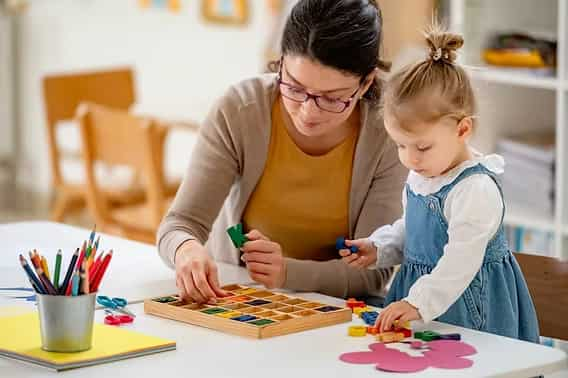
Play is not a luxury or merely entertainment—it is the primary mechanism through which young children construct knowledge, build their brains, and develop the foundational capacities they will rely on throughout life. Stage-based play, specifically, matters profoundly because children’s brains are fundamentally different at different ages, and the types of play children engage in must align with their cognitive, physical, and emotional maturation for optimal development. Understanding these stages enables parents and caregivers to recognize what children are naturally doing, support it intentionally, and create environments where development flourishes.
The Architecture of Early Brain Development Through Play
The brain’s capacity for change and adaptation—neuroplasticity—is highest during early childhood, particularly in the first four years of life. When children engage in play, their brains activate across multiple regions simultaneously, forming and strengthening neural connections at a rate that will never again be matched. During infancy and toddlerhood, the developing brain produces far more neural connections than it will ultimately need. The principle of “use it or lose it” applies directly: connections that are exercised repeatedly during play become strengthened and branch into more complex networks, while unused connections are pruned away.
What makes play uniquely powerful is that it stimulates the release of dopamine (associated with pleasure and motivation) and endorphins (promoting well-being), creating neurochemical conditions that enhance the brain’s receptivity to learning. Unlike passive exposure to information, play’s hands-on, exploratory nature activates the prefrontal cortex—the seat of executive functions including self-regulation, attention, decision-making, and impulse control. This means that when your 2-year-old stacks blocks or your 18-month-old drops toys to watch them fall, they are literally building the neural architecture that will support academic learning, emotional regulation, and problem-solving for decades to come.
Understanding the Six Stages of Play Development
Play development unfolds in predictable stages that reflect children’s emerging social awareness. Rather than viewing these as rigid categories, recognize them as overlapping, progressive phases that build sequentially:
Unoccupied Play (Birth to 3 Months) marks the beginning. Infants are not yet playing in any intentional sense; they are moving their arms and legs seemingly at random, kicking, gazing, and gradually learning that their body is separate from the environment. While it appears passive, this stage is foundational—infants are discovering how their bodies move and beginning to explore the world through sensation.
Solitary Play (Birth to 2 Years) represents children’s independent engagement with objects and their environment. The child has no interest in playing with others; instead, they explore toys, textures, and materials entirely on their own terms. This stage is critical for self-exploration and the development of autonomy. The child’s focus is inward and experimental, driven by curiosity about cause and effect.
Spectator or Onlooker Behavior (Around 2 Years) emerges as children become aware of other children playing. The child watches intently but does not yet participate; they may ask questions about what others are doing or speak to the playing children, but they remain outside the action. This observation is important—children are learning about social play by watching before attempting it themselves.
Parallel Play (2+ Years) occurs when children play alongside or near one another but remain engaged in separate activities. Two toddlers in a sandbox may each be digging independently, or two children may draw on their own papers while sitting side by side. They are aware of each other and may occasionally interact, but their focus remains on their own play, not collaboration. This stage introduces the comfort of peer presence without the complexity of coordinated interaction.
Associative Play (3 to 4 Years) marks a shift toward genuine peer interest. Children begin to care about what others are doing and start to engage with them, though the play remains relatively unstructured and each child may still pursue somewhat independent goals. Children negotiate, share toys, and discuss their play, learning the beginnings of social rules like turn-taking and consideration.
Cooperative Play (4+ Years) represents organized, goal-directed play with others. Children work toward shared objectives, assign roles, and follow established rules. While this stage typically emerges after age 4, the foundations are laid during associative play.
Stage-Aligned Cognitive Development: From Reflexes to Representation
Jean Piaget’s research identified six sub-stages within the sensorimotor period (birth to 2 years) that describe the progression from purely reflexive behavior to symbolic thought. This progression is essential to understand because it shows that cognitive development is not uniform across infancy—rather, it unfolds in qualitatively different phases:
| Sub-stage | Age | Key Developments |
|---|---|---|
| Simple Reflexes | Birth–6 weeks | Reflexive sucking, grasping, eye tracking; reflexes begin to become voluntary actions |
| Primary Circular Reactions | 6 weeks–4 months | Reproduction of chance events; repetitive hand movements; focus on infant’s own body |
| Secondary Circular Reactions | 4–8 months | Infants become object-oriented; intentional grasping for desired objects; repeating actions with external objects |
| Coordination of Secondary Reactions | 8–12 months | Hand-eye coordination develops; goal orientation emerges; “first proper intelligence”; deliberate planning begins |
| Tertiary Circular Reactions | 12–18 months | Infants experiment with objects to discover new properties; described by Piaget as the “young scientist” |
| Internalization of Schemas | 18–24 months | Primitive symbols emerge; mental representations develop; passage into preoperational stage begins |
A crucial milestone across these stages is the development of object permanence—the understanding that objects continue to exist even when hidden from view. Before about 8 months, when an object is out of sight, it literally ceases to exist in the infant’s mind. This is why peek-a-boo delights young infants: each time the face reappears, it is as if the person has been recreated. By around 12 months, infants actively search for hidden objects, indicating that their mental representation has become permanent. This shift is profound because it enables planning, memory, and the beginnings of symbolic thinking.
Motor Milestones and Play: The Physical Foundation
Play is the primary vehicle through which children develop both fine motor skills (hand-eye coordination, grasping, manipulation) and gross motor skills (crawling, walking, climbing, running). These motor capacities are not merely physical achievements—they are prerequisites for cognitive exploration and emotional confidence.
In the first months, infants engage with high-contrast visuals, rattles, and soft objects, gradually learning to grasp intentionally (the palmar grasp reflex becomes voluntary grasping by 6 months). Around 8-12 months, once crawling emerges, infants become far more mobile explorers. Play gyms, balls to chase, and hidden toys under blankets become developmentally appropriate because they support the motor skills that are emerging.
By 18-24 months, toddlers’ coordination improves significantly. They can now scribble, stack blocks, and manipulate containers. Shape-sorter games introduce problem-solving through trial-and-error—the child must figure out which shape fits which hole, developing both motor precision and cognitive persistence.
From age 2-3, children refine their motor skills through climbing on play equipment, kicking balls, and managing stairs. By age 3-4, children jump with both feet, walk on tiptoe, use scissors, and throw balls with increasing accuracy. Physical play simultaneously builds confidence in their bodies and strengthens the neural pathways that underlie coordination, balance, and spatial awareness.
It bears emphasis: research shows that structured programs combining motor activities with early literacy tasks (like acting out words while jumping or running) improve both motor and cognitive skills. This indicates that motor development and cognitive growth are deeply intertwined through play.
Language Development: Words Emerge from Interaction and Play
Play provides the most natural and effective context for language acquisition. Unlike passive listening to speech, active engagement in playful interaction—singing, narrating, turn-taking—creates rich, motivating opportunities for language learning.
When a caregiver sings nursery rhymes, plays peek-a-boo while naming body parts, or narrates what a child is doing (“You’re rolling the ball!”), the child is simultaneously hearing language, seeing its effects, and experiencing it in a warm, interactive context. This combination of auditory input, visual demonstration, and emotional engagement makes language acquisition far more robust than hearing words passively.
Pretend play is particularly powerful for language development. When children engage in role-play (pretending to be a parent, doctor, or animal), they use language to narrate scenarios, direct others’ play, and explore new vocabulary in meaningful contexts. Research indicates that children who engage in rich imaginative play develop more complex language structures and larger vocabularies.
Additionally, turn-taking games (rolling a ball back and forth, alternating in conversation) teach children the rhythms of communication and help them develop the pragmatic language skills necessary for real-world interaction. The repetition inherent in play—singing the same song multiple times, repeating favorite games—supports memory retention and helps children internalize vocabulary and sentence structures.
Emotional and Social Development: Learning to Regulate and Relate
Play is where children first learn to understand and manage their emotions and navigate relationships with others. In the safety of play, children experience a full spectrum of emotions—pride at building a tall tower, frustration when it topples, excitement about discovering something new—and they learn, through caregiver support and peer interaction, how to respond to these feelings constructively.
Through parallel and associative play, children begin to recognize that other children have intentions, preferences, and needs separate from their own. When one child takes a toy and another responds with frustration, or when two children negotiate how to share a sandbox, they are learning the foundational skills of empathy, negotiation, and social problem-solving.
Secure attachment—the child’s sense that their caregiver is consistently available, responsive, and protective—is foundational to healthy emotional development. Children who have formed secure attachments with caregivers develop the capacity to self-soothe and to use the caregiver as a “secure base” from which to explore the world and eventually, to separate and develop independence. Secure attachment is not built through lectures or instructions; it is built through responsive, attuned interaction during daily routines and play.
Research on social-emotional development shows that by age 3, children who have had adequate opportunities for interactive play begin to show mastery of aggression, increased cooperation, and the ability to share. By age 4, children can play in groups of 3-4 peers, engage in complex pretend scenarios, and are beginning to distinguish fantasy from reality. These capacities depend critically on prior experience with progressively more complex forms of play.
The Critical Role of Caregiver Presence in Play
Play development cannot be separated from the quality of caregiver involvement. Parents who actively engage in play with their children—following their child’s lead, narrating what the child is doing, responding with enthusiasm and curiosity—foster not only richer play but also secure attachment and accelerated cognitive development.
The most effective caregiver involvement is responsiveness rather than direction. When a caregiver mirrors a child’s actions (if the child shakes a rattle, the caregiver shakes one too), names what the child is experiencing (“You’re stacking the blocks high!”), and allows the child to lead the activity, the child feels seen, valued, and supported in their own discoveries.
Specific practices that maximize play’s developmental benefit include:
- Observing and following the child’s lead: Understanding what genuinely interests the child and creating play around those interests maintains engagement and motivation.
- Narrating play: Describing what the child is doing (not directing what they should do) provides language input in context and shows attunement.
- Turn-taking in simple games: Rolling a ball back and forth, alternating in peek-a-boo, or trading sounds teaches the rhythm of interaction.
- Repetition and slowing down: Children’s brains require time to consolidate learning; playing the same game or singing the same song repeatedly strengthens neural pathways and builds confidence.
- Introducing age-appropriate challenges gradually: Providing toys and activities slightly ahead of the child’s current capability (within their “zone of proximal development”) supports growth.
Importantly, research comparing parent-mediated play interventions to therapist-only interventions shows that parental involvement in play produces the largest therapeutic effects. This underscores that the parent-child relationship is itself the vehicle for development.
Play vs. Screen Time: The High-Stakes Comparison
The contrast between active, interactive play and passive screen exposure illuminates why play is irreplaceable. Excessive screen time reduces the frequency of rich face-to-face interactions between children and caregivers, the very interactions that build language, emotional connection, and understanding of social cues.
When young children spend time on screens, they simultaneously spend less time running, climbing, manipulating objects, and engaging in imaginative play. The physical inactivity associated with screen use contributes to reduced motor development. The passive nature of screen consumption means the child is not problem-solving, experimenting, or actively constructing understanding—instead, information is being delivered to the child.
Research also indicates that excessive screen time is associated with higher rates of sleep disruption, anxiety, and attention difficulties. The fast-paced, stimulation-heavy nature of many media may dysregulate young nervous systems.
By contrast, active play is associated with improved concentration, better classroom behavior, enhanced problem-solving ability, and stronger emotional regulation. The World Health Organization recommends that children under 5 “spend less time sitting watching screens and have more time for active play” to grow up healthy.
This does not mean screens are absolutely prohibited, but rather that they should be minimal and intentional (if present at all before age 2), never a default substitute for interaction and play.
Structured versus Unstructured Play: Both Are Necessary
A common source of confusion is whether play should be “structured” (teacher- or parent-led, with specific learning goals) or “unstructured” (child-directed, open-ended, free). The evidence is clear: both serve distinct developmental purposes, and the optimal approach combines both.
Unstructured play fosters creativity, imagination, independence, and emotional expression. When children direct their own play with open-ended materials (blocks, water, sand, dramatic play items), they make decisions, test hypotheses, recover from failure, and develop resilience. Unstructured play is where children feel most ownership and agency, which generates intrinsic motivation to learn.
Structured play, meanwhile, is more efficient at ensuring specific motor and cognitive skills are practiced and consolidated. A teacher or parent who guides a child through a balancing activity, teaches a turn-taking game with specific rules, or facilitates a movement sequence ensures that particular competencies are developed with targeted repetition. Structured activities also provide the scaffolding and feedback that accelerate skill acquisition.
Research on mixed approaches shows that combining structured and unstructured play produces higher overall physical engagement and skill development than either approach alone, particularly for 5-year-olds. The structure provides motivation and direction; the open-ended components allow for autonomy and creativity.
For optimal development, a daily rhythm might alternate between these: a child might have time for free play with blocks (unstructured), followed by a specific movement activity guided by a caregiver (structured), followed by time to imagine and explore with dramatic play props (unstructured again). This variation maintains engagement and develops both the structured competencies and the creative, autonomous capacities children will need.
Play-Based Intervention and Recovery from Adversity
For children who have experienced developmental delays, trauma, or adverse circumstances, play-based interventions have demonstrated significant therapeutic power. Research on play therapy reveals a large overall treatment effect (0.80 standard deviations), meaning that the average child receiving play-based intervention performs better than approximately 76% of control children.
More specifically, when parents are coached to implement play-based intervention strategies—such as engaging in joint play, following the child’s lead, and providing responsive feedback—children with developmental delays show measurable gains in joint engagement, functional play, and interaction with people and toys.
For children exposed to toxic stress or trauma, secure relationships with caregivers and play-based recovery approaches activate the parasympathetic nervous system and promote resilience. Play allows children to process difficult emotions and experiences in a safe context, re-establishing a sense of agency and control.
Practical Implications: Supporting Stage-Based Play at Home
Understanding these developmental stages enables parents to create play environments and activities aligned with their child’s current capacities:
Birth to 6 Months: Focus on sensory engagement. High-contrast visuals, soft sounds, gentle movement, and mirrors support early exploration. Tummy time strengthens neck and shoulder muscles for future crawling. Narrate what you’re doing and what the baby is experiencing.
6 to 12 Months: Introduce cause-and-effect play. Rattles, toys that make noise, shape sorters (even simple ones), and containers to fill and empty engage the emerging understanding that actions have effects. Play peek-a-boo to build object permanence. Encourage reaching and grasping to develop intentional motor control.
12 to 18 Months: Offer materials for exploration and early construction. Simple puzzles (1-2 pieces), nesting cups, water play, and blocks begin to challenge problem-solving. Pretend play emerges (pretending to drink from an empty cup)—engage with and expand these scenarios.
18 to 24 Months: Increase complexity of puzzles and construction. Support naming of objects and body parts. Encourage more elaborate pretend play (feeding a doll, pushing a toy car). Begin simple turn-taking games. Allow repetition of favorite activities; this is how skills consolidate.
2 to 3 Years: Introduce group play opportunities, though parallel play remains common. Provide larger motor play (climbing, running, kicking balls). Expand dramatic play with props and costumes. Support vocabulary growth through narration and songs. Begin following simple rules in games.
3 to 4 Years: Support increasingly complex imaginative scenarios. Facilitate peer play opportunities while still honoring the child’s need for independence. Introduce more challenging motor activities (balance beams, jumping games). Support emerging cooperative play with small groups of peers.
Throughout all stages, the most important ingredient is responsive presence. A parent who is genuinely engaged—following the child’s lead, expressing delight in the child’s discoveries, supporting them through frustration, and providing language input in context—creates the conditions where play becomes the powerful developmental force it is designed to be.
Stage-based play matters because it is the mechanism through which children’s brains literally construct themselves. From birth through age 4, play is not separate from development—it is development. The neural pathways, emotional capacities, motor skills, social understanding, and cognitive structures that emerge during play in these early years form the foundation for all future learning, resilience, and well-being.
For parents and caregivers, the implication is both simple and profound: create time and space for play, follow children’s lead, respond with warmth and attunement, and trust that when young children play, they are doing perhaps the most important work of their lives. No expensive toy or sophisticated curriculum can replace the power of a caregiver who is present, engaged, and attuned to the child’s unfolding curiosity and growth.