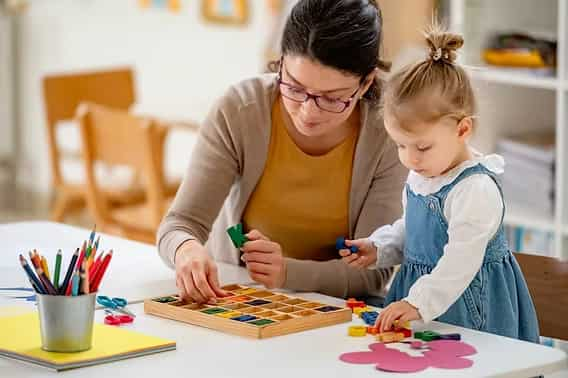
When parenting experts and developmental specialists select toys for children, they don’t rely on marketing claims, brand names, or colorful packaging. Instead, they apply evidence-based frameworks, understand developmental science, and evaluate toys systematically against criteria that research has proven support optimal growth. Understanding how experts think about toy selection transforms parents’ ability to invest in materials that meaningfully advance their child’s development.
The Expert Framework: The Play Pyramid
Behind every developmental specialist’s toy recommendation lies a sophisticated classification system called the Play Pyramid. This framework organizes toys along four independent dimensions that define their developmental value:
1. Sensory Play Value — How well does the toy engage the five senses? Does it offer varied textures (smooth, bumpy, crinkly), colors, sounds, and tactile experiences that build sensory processing and neural connections?
2. Fantasy Play Value — Does the toy support imaginative and pretend scenarios? Can the child use it to act out stories, take on roles, and explore their imagination without predetermined outcomes?
3. Construction Play Value — Can the child build, create, or compose with the toy? Does it offer possibilities for assembling, stacking, combining, or creating something new?
4. Challenge Play Value — Does the toy present problem-solving, strategic, or physical challenges that engage the child’s cognitive or motor capacities?
The most developmentally powerful toys engage multiple dimensions simultaneously. A wooden block engages construction (stacking), challenge (balancing without falling), fantasy (building a castle), and even sensory (the weight and texture of wood). A doll engages fantasy (role-play scenarios), sensory (soft texture), and challenge (caring for the doll appropriately).
A toy that engages only one dimension—say, sensory input from a toy that makes sounds—has limited developmental reach. But a toy engaging three or all four dimensions offers exponentially greater developmental value.
The Selection Process: Expert Criteria
Experts don’t simply ask, “Is this toy fun?” They systematically evaluate toys against evidence-based criteria that research has linked to optimal development.
Criterion 1: Age-Appropriateness Within the Zone of Proximal Development
The first question experts ask: Does this toy match the child’s current developmental stage?
Research is clear: children utilize age-appropriate toys significantly more effectively than toys designed for older children. A puzzle too complex causes frustration and abandonment. A puzzle too simple causes boredom. Age-appropriate toys—those designed for the child’s current stage—are used fully and support learning.
But age-appropriate doesn’t mean based solely on age number. It means matching the toy to the child’s:
- Motor capabilities: Can they physically grasp and manipulate it?
- Cognitive understanding: Do they grasp the toy’s purpose or possibilities?
- Social-emotional readiness: Are they ready for peer play with it?
- Attention span: Does the toy hold their interest?
Experts understand that the zone of proximal development—the gap between what a child can do independently and what they can do with support—is where learning happens. A toy in the ZPD is slightly challenging, achievable with effort or adult support, but not frustrating.
Criterion 2: Multi-Domain Developmental Alignment
Rather than selecting toys for a single skill, experts ask: Which developmental domains does this toy address?
Research shows that toys specifically designed to promote certain developmental domains show a 32% improvement in related skills compared to control groups. But the most expert selections address multiple domains simultaneously.
| Domain | Expert Questions |
|---|---|
| Cognitive | Does it build problem-solving, memory, spatial thinking, or reasoning? |
| Motor (Fine) | Does it develop hand strength, precision, hand-eye coordination? |
| Motor (Gross) | Does it develop running, jumping, climbing, balance, coordination? |
| Social-Emotional | Does it promote empathy, cooperation, emotional expression, or self-regulation? |
| Language | Does it encourage communication, vocabulary building, or early literacy? |
| Sensory | Does it provide varied sensory input (texture, color, sound, temperature)? |
A wooden block addresses all six. Building it develops fine motor (placement), gross motor (reaching and balancing), spatial cognition (understanding 3D space), problem-solving (how to stack without falling), language (naming colors, describing what they’re building), and sensory (the weight and texture of the wood).
By contrast, a battery-operated toy that plays music when a button is pressed addresses primarily sensory input—and that input is predetermined, not something the child controls.
Criterion 3: Open-Endedness vs. Structured Purpose
Expert toy selection reveals a sophisticated understanding of the difference between two valuable but distinct toy types.
Open-Ended Toys (blocks, dramatic play props, art supplies, balls) have no predetermined outcome. There’s no “right way” to use them. This seemingly simple characteristic has profound implications:
- The child generates the ideas and directs the play
- The same toy supports play across years (blocks for stacking at age 1, for elaborate structures at 4, for spatial reasoning at 7)
- They develop cognitive flexibility (thinking creatively, adapting when plans change)
- They foster resilience (the tower falls—rebuild it a different way)
- They invite creativity and imagination without limits
Structured Toys (puzzles, shape sorters, games) have specific goals or correct solutions. They teach focused completion and mastery.
The critical finding: Structured toys’ effectiveness depends entirely on age-appropriateness. A puzzle at the right level teaches persistence and satisfaction. A puzzle too complex causes abandonment. This is why experts prioritize structured toys for specific developmental moments, not as the foundation of toy collections.
Expert Practice: Curate a collection where approximately 70% are open-ended (blocks, dramatic play props, art supplies, balls) and 30% are structured (age-appropriate puzzles, games) with specific learning goals.
Criterion 4: Versatility and Longevity
Experts look for toys that answer the question: Will this toy remain relevant as my child grows?
Toys with built-in versatility offer exceptional value because they “grow with the child” across years.
Examples of Versatile Toys:
- Shape Sorters: Can start with the lid removed (easier) and progress to complete matching when ready. Relevant from 6 months to 24+ months.
- Blocks: Used for stacking at age 1, for building elaborate structures at 4, for understanding geometric relationships at 7, for spatial reasoning concepts at 10.
- Balls: Rolled at 9 months, thrown at 2 years, caught at 3-4 years, used in games at 4+.
- Dolls: Used for simple functional care (feeding) at 18 months, for complex role-play narratives at 4 years.
By contrast, a toy designed for a specific moment (like a toy for learning specific colors) becomes irrelevant once the child masters that skill.
Criterion 5: Engagement Through Parent-Child Interaction
A finding that distinguishes expert selection from consumer marketing: Some toys actually reduce parent-child interaction, while others facilitate it.
Research shows a striking difference:
- Interactive toys with batteries and lights: Infants become fascinated by the toy’s features and sounds rather than engaging with the parent. This reduces joint attention (shared focus) between parent and child.
- Passive toys (blocks, dolls, balls): Encourage more collaborative exploration. Parents narrate what the child is doing, model different uses, and engage in back-and-forth interaction.
- Toys requiring two people (pretend play sets, balls for rolling back and forth): Naturally facilitate parent-child interaction.
This matters because joint attention between parent and child is a robust predictor of language acquisition, social development, and cognitive growth.
Experts deliberately select toys that invite co-play over toys that work independently.
Criterion 6: Fewer Toys, Deeper Engagement
A counterintuitive expert finding: Children with fewer, carefully curated toys show significantly deeper engagement and greater creativity than children with many toys.
Research is compelling:
- Environments with one toy available: Longer, uninterrupted episodes of focused play
- Environments with three toys: Moderate decline in focus
- Environments with five toys: Fragmented attention, frequent shifting
- Overall finding: Children with fewer, more versatile toys demonstrated 63% longer play periods and 52% more creative play variations than those with extensive collections.
Why? When a child faces five toy options, attention becomes fragmented. When facing one toy, the child must engage more deeply, explore more possibilities, and develop more creative uses.
Expert Practice: Rather than accumulating toys, strategically curate a collection. Remove toys periodically (rotating them back in later) to maintain novelty without overwhelming.
Criterion 7: Safe Materials and Quality Construction
Experts emphasize safety and material quality:
- Non-toxic materials: Wood and natural fabrics preferred over plastic
- Durability: Construction that withstands repeated play (toys are used many times)
- Safety standards: Meets age-appropriate safety guidelines
- No choking hazards: Particularly important for children under 3
- Natural materials more engaging: Wood and fabric toys engage children differently (and better) than synthetic materials
Research shows that the material quality affects engagement. Children interact longer and more imaginatively with toys made from natural materials.
Criterion 8: Emotional Attachment Potential
Experts recognize that toys facilitate emotional development in ways beyond “fun.” Toys can serve as:**
- Security objects: Comfort items that help children self-soothe
- Emotional processing tools: Dramatic play props that allow safe exploration of feelings
- Creative expression media: Art supplies and playdough for non-verbal emotional processing
- Relationship builders: Toys inviting shared play that strengthen parent-child bonds
Research shows toys that foster positive emotional attachments (through personalization, emotional regulation benefits, and affective connection) support broader holistic development.
How Expert Selection Works in Practice: Developmental Stages
To show how experts apply these criteria, here’s how they select for different ages:
Infants (0-12 Months)
Experts ask: What does this age group need developmentally?
- Sensory awareness building: Early visual and tactile exploration
- Grasping development: Progression from reflex to intentional grasp
- Cause-and-effect understanding: Learning that actions have results
- Parent-child attachment: Toys supporting interaction
Expert Selections match these needs:
- High-contrast boards and soft books: Engage developing vision (high contrast = clear to developing eyes), support tummy time (motor), invite narration (language)
- Soft rattles and crinkle toys: Grasping practice, auditory input, respond to infant action (cause-effect)
- Mirrors (unbreakable): Visual exploration, emerging self-awareness
- Activity gyms: Multiple sensory inputs, support reaching and tummy time, invite parent interaction
- Safe objects to mouth: Teething relief, texture exploration, taste/touch development
Notably absent from expert infant selections: battery-operated toys, screens, toys with predetermined patterns. Experts know infants learn through direct interaction with real materials and responsive caregivers, not passive observation of toy features.
Toddlers (12-24 Months)
Experts ask: What’s changing developmentally?
- Functional understanding: Toys used according to real-world purpose (cups for drinking, phones for calling)
- Emerging pretend play: First symbolic thinking appearing
- Motor sophistication: Walking, climbing, refined manipulation
- Language explosion: Vocabulary and understanding growing rapidly
Expert Selections address these shifts:
- Stacking cups and nesting toys: Problem-solving, spatial relationships, repetitive manipulation (adults note children play with these for extended periods), multi-sensory feedback
- Shape sorters (2-3 pieces initially): Problem-solving, spatial reasoning, hand-eye coordination, adaptable difficulty
- Chunky wooden puzzles: Fine motor, spatial understanding, persistence
- Push/pull toys: Supporting walking development, balance, motivation for movement
- Soft blocks for stacking: Building, toppling, reconstructing—developing understanding of stability and balance
- Simple pretend props (dolls, play food): Early symbolic play, emotional attachment, family scenario exploration
Research Insight: Children using push-walkers master independent walking an average of 4 weeks earlier than those without.
Preschoolers (2-4 Years)
Experts ask: What advances are now possible?
- Imagination: Elaborate pretend play scenarios possible
- Cooperation: Peer play becoming possible
- Construction: Complex building possible
- Cognitive challenge: More sophisticated problem-solving
- Fine motor refinement: Hand strength and control advancing
Expert Selections enable these advances:
- Building blocks (wooden, magnetic, interlocking): Construction, spatial reasoning, planning, problem-solving, works in groups—research shows block play associated with 27% improvement in mathematical thinking by kindergarten
- Dramatic play sets (kitchen, doctor, community helpers): Complex imaginative scenarios, role-taking, language development, emotional processing, peer play
- Matching and sorting games: Categorization, pattern recognition, cooperation if group games
- Puzzles with increasing pieces: Progressive challenge, persistence, spatial reasoning
- Art supplies (markers, paint, playdough): Fine motor, creative expression, emotional outlet
- Dress-up clothes and puppets: Imaginative play, role-exploration, peer interaction
What Expert Selection Deliberately Avoids
As important as understanding what experts choose is understanding what they deliberately avoid:
Not Expensive Toys
Expensive toys offer no developmental advantage over simple, thoughtfully chosen alternatives. Expert-recommended toys span price ranges from free (plastic containers, wooden spoons) to moderately priced (quality wooden blocks, simple puzzles).
Not Screen-Based or Battery-Operated “Educational” Toys
Marketing claims about “brain-building” or “educational” technology-based toys often exceed the evidence. Research on screen-based toys shows:
- Mixed or negative results for children under 3
- Reduced parent-child interaction compared to passive toys
- Less engagement with imagination compared to open-ended materials
Experts note that the American Academy of Pediatrics recommends minimal screen exposure before age 2.
Not Toys That “Do the Play For the Child”
Experts deliberately avoid toys that provide predetermined play patterns—toys that flash, play songs, or move when buttons are pressed—if those are the toy’s primary features. These toys require passive observation, not active problem-solving or imagination.
Not Quantities That Create Overwhelm
Contrary to the cultural norm of toy abundance, experts deliberately recommend reducing available toys. This is the opposite of the consumer marketing message that more choice is better.
The Role of Parental Engagement: The Multiplier Effect
Expert toy selection reveals a crucial insight: A toy’s developmental value depends partly on how an adult engages with the child using it.
Research on parent-toy-child interactions shows:
- When a parent simply lets a child play alone with toys, learning occurs
- When a parent joins the play and co-plays, engagement deepens significantly
- When a parent narrates (“You’re stacking so high! Look at the tower!”), vocabulary input increases
- When a parent extends (“What if we made it even taller?”), cognitive challenge increases
- When a parent follows the child’s lead (supporting their interests rather than directing), intrinsic motivation remains high
Key Research Finding: Children experiencing a balance of guided and independent play showed stronger executive function skills by age 7 than those with primarily one type of experience.
This means that the same toy in different contexts—alone, with minimal parental engagement versus with an engaged parent—produces different developmental outcomes. Experts always consider: “How will caregivers interact with this toy?”
The Practical Expert Checklist
When evaluating whether a toy truly supports development, experts apply this systematic approach:
Safety & Materials
- Is it age-appropriate per manufacturer guidelines and the child’s stage?
- Non-toxic, durable, high-quality materials?
- Safe edges, no choking hazards?
Developmental Alignment
- Addresses the child’s current stage (not too easy, not too hard)?
- Supports at least one developmental domain (better if multiple)?
- Within Zone of Proximal Development?
Play Value
- Offers multiple dimensions of play (sensory, fantasy, construction, challenge)?
- Open-ended (no single “right way” to use it)?
- Allows for varied, repeated use?
Versatility & Longevity
- Can be used in different ways as child grows?
- Built-in levels of challenge?
- Will it remain interesting across years, not just months?
Engagement
- Invites parent-child co-play?
- Intrinsically motivating (child wants to play)?
- Allows child to direct play (internal control)?
- Encourages playfulness, creativity, imagination?
Collection Fit
- Complements existing toys rather than duplicating?
- Fills a gap in developmental domains?
- Adds to a curated collection (not excess)?
- Balances open-ended with some structured options?
The Expert Secret: Free and Homemade Toys
A finding that surprises many parents: Experts often recommend free or homemade toys over commercial ones.
Expert-Recommended Free/Low-Cost Options:
- Measuring cups and spoons (stacking, nesting, shaking—multi-sensory)
- Plastic containers (fill, empty, stack—open-ended construction)
- Balls of socks or yarn (rolling, throwing, lightweight safety)
- 2-liter bottles filled with safe items and sealed (sensory exploration)
- Wooden spoons and pots (cause-effect through drumming)
- Washcloths (hiding surprises, water play, multiple uses)
- Empty plastic food containers (pretend cooking, organization sorting)
Research Finding: When parents and children co-create toys (making playdough together, transforming socks into puppets, creating sensory bottles), children show 47% greater engagement with the toy compared to commercial alternatives.
Conclusion: Expertise Is About Principles, Not Brands
When parenting experts choose toys, they’re not consulting marketing materials or brand reputations. They’re applying developmental science, understanding how children learn, and evaluating toys against evidence-based criteria. The remarkable finding is that the toys supporting development best are often the simplest, most open-ended, and least expensive.
Experts’ approach can be summarized in several principles:
- Age-appropriate toys within ZPD are used more effectively than toys for older ages.
- Multi-domain toys (addressing cognitive, motor, social-emotional, and language simultaneously) offer greater value than single-skill toys.
- Fewer toys with deeper engagement support better development than many toys with scattered attention.
- Open-ended toys that grow with the child offer better value than toys with limited purposes.
- Parent-child co-play multiplies a toy’s developmental value beyond what independent play achieves.
- Quality materials and safe construction matter more than features and batteries.
For parents, adopting expert approaches means: Choose fewer toys thoughtfully. Prioritize open-ended, multi-domain toys. Match to your child’s current stage. Play together. Trust that simple is often best.