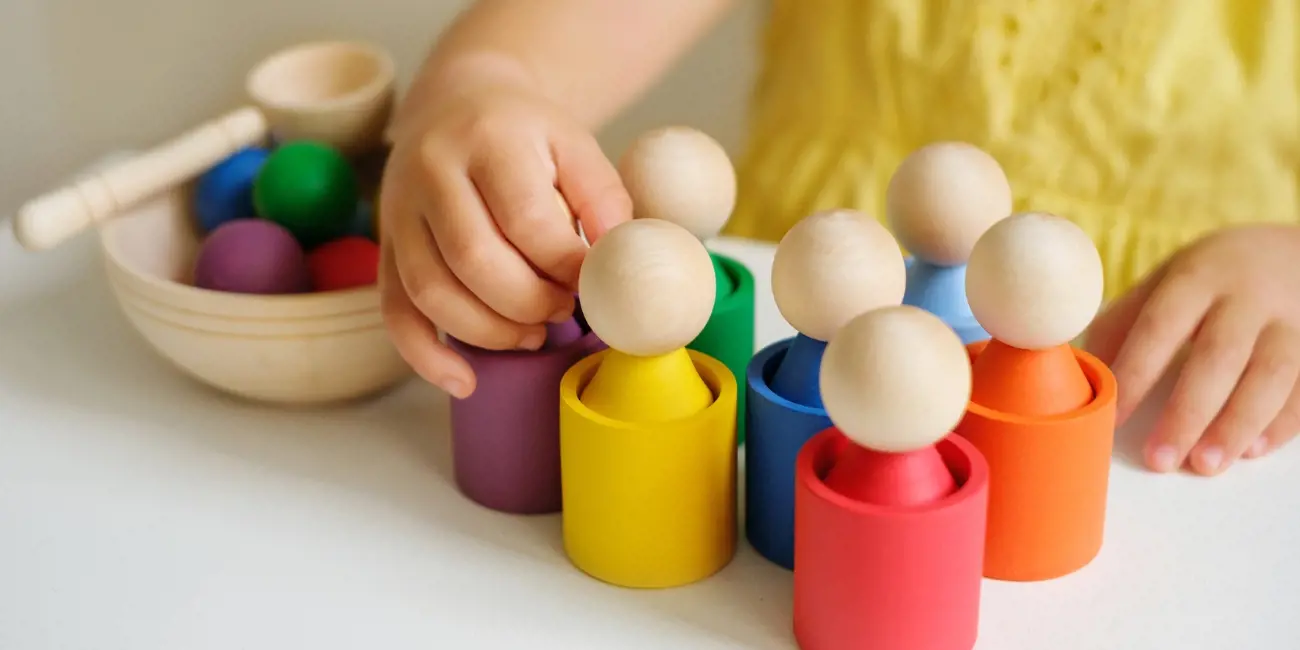
The intuition seems backwards: if a child has more toys, shouldn’t they be happier and more stimulated? Yet research conducted over decades tells a surprising story. The most robust finding in developmental psychology about toys is counterintuitive: fewer toys actually produce better play, deeper learning, and more creative development than toy-filled environments. This finding has been replicated in multiple studies and has become the foundation of modern toy-selection science.
Understanding why this is true—and how to implement it—transforms how parents approach toy selection and toy management.
The Landmark Research: University of Toledo Study
The most cited study on toy quantity and play quality comes from researchers at the University of Toledo, published in the journal Infant Behavior and Development.
Study Design and Participants
Researchers recruited 36 toddlers aged 18-30 months and observed them in two conditions:
Condition 1: Free play with 4 toys available
Condition 2: Free play with 16 toys available
Each session lasted half an hour. Researchers recorded the duration of play, the variety of ways children used each toy, and the sophistication of play patterns.
Findings: The Results Changed How Experts Think About Toys
The results were striking and clear:
Duration of Play: Children with 4 toys played twice as long with each toy compared to children with 16 toys.
Quality of Play: Children with 4 toys demonstrated significantly higher quality play, including:
- More varied use: Finding multiple creative uses for each toy
- More sophisticated play: Play evolved from simple exploration to complex scenarios
- More expansive games: Play sessions extended and built upon previous actions
- Greater imaginative depth: More elaborate stories and scenarios
The researchers concluded: “When provided with fewer toys in the environment, toddlers engage in longer periods of play with a single toy, allowing better focus to explore and play more creatively.”
The Broader Context: What This Study Revealed
This wasn’t the first research suggesting fewer toys benefit development. A 1990s German study removed toys entirely from a Munich nursery for three months. After just weeks of adjustment, children’s play became dramatically more creative and socially engaged, using classroom materials in inventive ways.
But the University of Toledo study quantified the effect in precise, measurable ways. It showed that a move from 16 to 4 toys produced concrete, measurable improvements in play quality and duration.
Why Does This Happen? The Neuroscience of Choice and Attention
The research reveals a paradox: the child surrounded by more toys is actually less engaged. Understanding the “why” requires looking at how children’s developing brains handle decision-making, attention, and stimulation.
The Problem: Decision Fatigue in Young Children
Research on decision-making reveals a principle: we have limited willpower and mental energy for decisions. Once depleted, decision quality declines and impulsivity increases.
How this affects children with too many toys:
A child entering a playroom with 100 toys faces not 1 decision but potentially 100: “Which toy should I play with? What should I do with it? What if I want something else?” Research shows that when facing excessive choices, people—especially young children—experience “choice paralysis.”
In children specifically:
- Frontal lobes (executive function centers) are still developing
- Decision-making capacity is immature
- Decision fatigue affects children even MORE severely than adults
- A 18-month-old choosing among 100 toys experiences significant cognitive overload
Possible outcomes when a child faces toy overload:
- Apathy: “I don’t have anything to play with” (paradoxical but true—overwhelmed by options, child becomes passive)
- Recklessness: Throwing toys, dumping bins, acting impulsively (decision fatigue triggers poor impulse control)
- Continuous switching: Jumping between toys without engagement (restless searching without committing)
The result: Worse play quality, not better, despite more options.
Cognitive Load and Attention Development
A related mechanism involves attention and stimulation:
With too many toys:
- Visual environment becomes chaotic (colors, shapes, toys competing for attention)
- Auditory environment becomes overstimulating (if toys make sounds, they compound)
- Child’s developing attention system becomes overloaded managing input
- Attentional networks can’t focus on any single toy deeply
With fewer toys:
- Visual environment is calm and organized
- Reduced sensory stimulation allows focus
- Attention can be directed toward play itself, not managing choices
- Attentional networks develop stronger focus capacity
Research finding: Children in low-stimulation, organized environments show superior attention span development compared to those in stimulating, cluttered environments.
The Novel Toy Response and Dopamine
One mechanism driving continuous toy-switching is the dopamine response to novelty. Each new toy provides a dopamine hit (novelty response). With many toys available:
- Child experiences constant novelty (toy-switching dopamine hits)
- Tolerance builds quickly (each toy’s novelty wears off faster)
- Child becomes restless, seeking next novelty
- This patterns the brain toward novelty-seeking rather than deep engagement
With fewer toys:
- Novelty response habituates naturally (child learns the toy fully)
- Play deepens beyond initial novelty
- Brain patterns toward sustained focus and imagination
- Dopamine system becomes responsive to self-generated stimulation, not just novelty
The Research Findings: What Fewer Toys Actually Produce
Beyond the headline finding (kids play longer with fewer toys), research reveals specific developmental benefits:
Benefit 1: Dramatically Increased Creativity
Finding: Children with 4 toys demonstrated 52% more creative play variations than those with 16 toys.
How does this happen?
Creativity emerges from constraint: When a child faces limited materials, they must generate possibilities rather than discover them. A wooden block doesn’t come with instructions, so the child invents: castle, bridge, phone, road, person, food.
Extended time enables deeper imagination: The extra time spent with a single toy allows the child to exhaust simple uses (stacking) and move into complex scenarios (the tower becomes a castle with stories and characters).
Research on divergent thinking: Studies specifically examining creativity found that children with open-ended toys (few, simple) showed significantly greater divergent thinking (ability to generate multiple solutions) compared to children with predetermined, multiple-use toys.
Benefit 2: Superior Focus and Attention Span Development
Finding: Children with fewer toys engage in longer periods of sustained focus.
Why:
- Decision burden reduced, attention available for play
- Single toy focus develops attention circuits
- Reduced environmental distraction supports concentration
- Play deepens with time, maintaining engagement
Long-term impact: Attention span—a crucial skill for learning—develops better in environments supporting sustained focus.
Benefit 3: Stronger Problem-Solving and Independence
Finding: Children with limited toy options develop superior problem-solving and resourcefulness.
Why:
- Limited options force children to solve problems creatively
- “What can I do with what I have?” develops resourcefulness
- Open-ended toys naturally invite trial-and-error
- Success experiences build confidence in independent thinking
Example: A child with only blocks must figure out how to build a stable structure (problem-solving), while a child with 16 toys including a “building set” with instructions has the problem pre-solved.
Benefit 4: Improved Toy Care and Appreciation
Finding: Children value toys more when options are limited.
Why:
- With 10 identical items: one breaks, grab another (no consequence)
- With 1 valued item: child takes care of it (learns responsibility)
- Limited options = each toy is precious
- Child develops appreciation for what they have
Parental benefit: Toys last longer, need less replacement, child learns stewardship.
Benefit 5: Enhanced Independent Play Capacity
Finding: Children with fewer toys develop stronger self-directed play skills.
Why:
- Fewer toys = less reliance on external variety for entertainment
- Child must generate own play narratives and activities
- Develops intrinsic motivation and self-direction
- Trains neural systems for independent thinking
Contrast: Child with 100 toys often waits for “something interesting” to happen. Child with 4 toys must create interest themselves.
Benefit 6: Reduced Stress and Anxiety
Finding: Fewer toys create calmer environments supporting emotional regulation.
Why:
- Visual chaos (toys everywhere) creates background stress
- Overwhelming choices create decision anxiety
- Organized, minimal environments are neurologically calming
- Predictable environment supports emotional regulation
For children: Less sensory overwhelm, more capacity for regulated play
For parents: Less stress managing clutter, easier cleanup, calmer home environment
The Decision Fatigue Connection: A Parallel Research Track
Recent research on decision fatigue provides additional explanation for why toy abundance harms development.
How Decision Fatigue Works
The science: Each decision depletes a limited pool of mental resources (executive function capacity). As willpower depletes throughout the day, subsequent decisions become poorer and more impulsive.
Research evidence: Studies show that when consumers face 20-30 product options, they’re LESS likely to purchase and feel MORE regret compared to choosing from 6 options.
In children specifically: Decision fatigue affects young children even more severely than adults because:
- Frontal lobes (decision centers) are immature
- Children’s daily decision load is already high (what to wear, what to eat, etc.)
- Adding 100 toy options further depletes cognitive resources
How Toy Overload Triggers Decision Fatigue Responses
When a child faces overwhelming toy choices:
Response 1 – Apathy/Overwhelm
“I don’t have anything to play with” (despite having everything)
- Too hard to decide; child gives up
- Leaves play space unengaged
- May ask parent: “I’m bored” (not because nothing is interesting, but because choosing is too hard)
Response 2 – Recklessness
- Throws toys without purpose
- Dumps bins impulsively
- Exhibits behavior parents interpret as “wild” or “overstimulated”
- Actually manifesting decision fatigue-induced impulse control failure
Response 3 – Continuous Switching
- Jumping between toys without meaningful engagement
- Searching restlessly for something
- Appears busy but not engaged
- Actually fleeing decision fatigue by not committing to any single choice
The tragic irony: The parent buying more toys to keep the child engaged actually makes the situation worse.
The Solution: Fewer Toys + Toy Rotation
Rather than eliminating all toys (impractical for most families), toy rotation systems provide the research-backed benefits while preserving toy variety.
How Rotation Works
Simple process:
- Assess total collection: What toys does the child actually have?
- Select for active play: Choose 3-5 toys per developmental category to keep accessible
- Store the rest: Pack away remaining toys in labeled bins
- Rotate on schedule: Every 2 weeks to monthly (or as child’s interest changes)
- Reintroduce: Toy that was boring 3 weeks ago feels fresh and exciting
Why Rotation Works Better Than Constant Access
Manages novelty without overwhelm: Stored toy reintroduced feels “new” despite being familiar. This novelty reignites engagement without the clutter of all toys out.
Extends toy lifespan: A toy that would have been abandoned after 2 weeks of constant access can stay “fresh” and engaging for years through rotation.
Matches developmental change: As child develops, rotation can shift available toys to match new interests and emerging skills.
Reduces decision burden: Child with 3-5 options has meaningful choice without overwhelm. Child with 50 options has paralyzing choice.
Maintains calm environment: Parent and child both benefit from organized, manageable playroom
Recommended Toy Quantities
Research and expert recommendations suggest:
Total toys (all categories combined): 15-30 toys
Active toys available at any time: 3-5 toys per developmental category
Sample allocation:
- Building/construction: 3-5 toys
- Fine motor: 3 toys
- Gross motor: 3 toys
- Dramatic play: 3-5 toys
- Art/sensory: 3 toys
- Books: 5-10 (books rarely overstimulate)
- Total accessible: 18-26 toys
Remaining toys: Stored for rotation, swapped in every 2-4 weeks
Rotation Frequency
No fixed rule: Rotation should match individual child and family:
- Weekly rotation: Ambitious, requires consistency, maximum novelty
- Bi-weekly rotation: Moderate, manageable for most families
- Monthly rotation: More sustainable, still provides novelty benefit
- As-needed: Rotate when child demonstrates boredom with current selection (most flexible)
Key principle: Even occasional rotation is better than constant full access.
The German Toy-Free Nursery Study: Extreme Evidence
The most extreme evidence for the “less is more” principle comes from 1990s research by German educators Elke Schubert and Rainer Strick.
The Study
Intervention: Remove ALL toys from a Munich nursery for 3 months
The Findings
After just a few weeks:
- Children adjusted to toy absence
- Play became dramatically more creative
- Social interaction increased dramatically
- Children used classroom materials inventively (chairs became vehicles, blankets became homes, fabric scraps became props)
- Published results in book “The Toy-Free Nursery”
The Implication
If complete toy removal resulted in better play than typical toy-filled nurseries, this strongly supports the principle: even some toys are too many for optimal development.
While most parents won’t eliminate all toys, this research suggests that toy minimalism (not zero toys, but very few) moves in the developmentally beneficial direction.
Practical Implementation: How to Transition to Fewer Toys
Phase 1: Audit
Gather all toys and ask for each:
- Age-appropriate for my child?
- Does my child play with it?
- Safe and in good condition?
- Supports development (not just entertainment)?
- Open-ended (multiple uses) or predetermined (single use)?
- Do we have multiples we don’t need?
Action: Set aside toys that don’t meet criteria. Consider donating, selling, or discarding.
Phase 2: Categorize
Sort remaining toys by developmental domain:
- Building/construction: Blocks, Duplo, Lego, building sets
- Fine motor: Puzzles, threading, sorting, shape sorters
- Gross motor: Balls, push/pull toys, climbing equipment
- Dramatic play: Dolls, kitchen, dress-up, pretend sets
- Art/sensory: Markers, paint, playdough, water/sand toys
- Books: Picture books, board books, stories
- Music: Instruments, sound toys
Phase 3: Select for Rotation
From each category, select toys to keep accessible:
Keep visible (active rotation):
- 3-5 toys from each developmental category
- Best toys (most-used, most-engaging)
- Toys matching current interests
Store for later rotation:
- Remaining toys in labeled bins
- Accessible but not immediately visible
Phase 4: Organize Accessible Space
Display remaining toys for child self-selection:
- Low, open shelves: Child can see and select without asking
- Clear bins/baskets: Child knows what’s in each bin
- Labeled containers: Helps child learn organization
- One toy per basket: Easier for child to manage and clean
Phase 5: Establish Rotation Schedule
Choose frequency that’s sustainable:
- Mark calendar
- Swap toys on schedule (same day each week/month helps habits)
- Only swap toys if child seems ready (not rigid rule)
- Involve child in process (builds anticipation for “new” toys)
Phase 6: Manage New Toys (Gifts, Purchases)
Ongoing challenge: gifts and new purchases.
Strategies:
- Ask gift-givers for experiences rather than toys (classes, activities, zoo membership)
- For received gifts: open immediately, select which ones to keep accessible, store others
- For new purchases: follow same protocol—don’t automatically add to visible collection
- Discuss with child: “Which toy should we put away to make room for this?”
The Counterargument: Potential Limitations
It’s important to acknowledge research limitations:
What We Don’t Know
The University of Toledo study observed one 30-minute play session with 36 toddlers (mostly girls, mostly well-off). Research questions include:
- Long-term effects: Does benefit persist beyond one session?
- Novelty habituation: Do children eventually bore with 4 toys despite variety?
- Individual differences: Do all children benefit equally?
- Age variations: How do benefits vary across ages?
When Fewer Toys May Not Be Optimal
- Siblings of different ages: Toys suiting 2-year-old may not engage 5-year-old
- Special needs: Some children may need specific toys for therapy or accommodation
- Individual temperament: Some children may genuinely benefit from more variety
- Space constraints: Not all homes can accommodate separate storage
Honest Implementation Challenges
- Consistency: Rotation systems require parental follow-through
- Family pressure: Grandparents, relatives may resist minimalist approach
- Space: Storage space needed for rotated toys
- Adjustment period: Children may protest transition to fewer toys initially
Bottom Line: What the Research Supports
Across multiple studies conducted over decades, the evidence consistently demonstrates:
✓ Fewer toys lead to longer engagement with each toy
✓ Fewer toys support higher-quality, more creative play
✓ Fewer toys improve focus and attention span development
✓ Fewer toys reduce decision fatigue and cognitive overwhelm
✓ Fewer toys support development of independent, self-directed play
✓ Fewer toys improve toy care and appreciation
✓ Fewer toys create calmer, less stressful play environments
✓ Toy rotation preserves benefits while adding periodic novelty
The research conclusion is clear: When it comes to toys, less truly is more.
For parents, this means that the path to better child development isn’t buying more toys—it’s thoughtfully curating fewer, higher-quality toys and using rotation systems to maintain freshness and novelty.