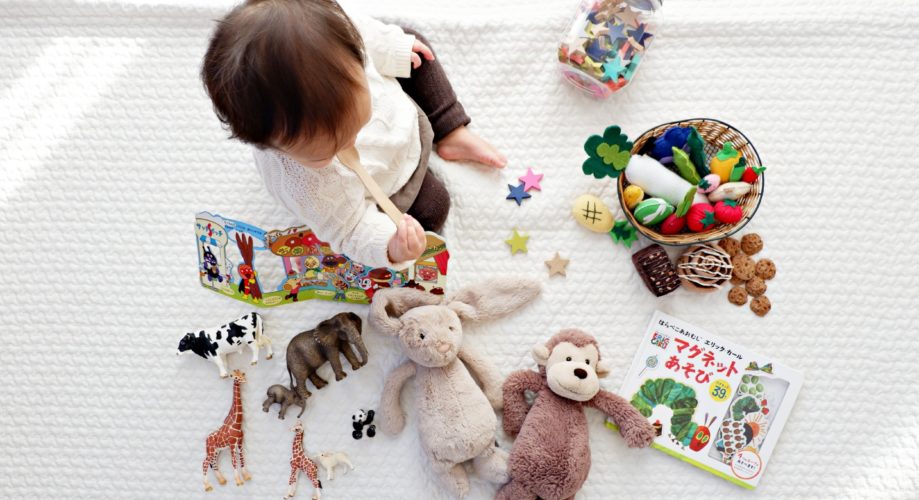
The term “expert curated” appears frequently in parenting content and product marketing, but its actual meaning—and what separates truly curated collections from clever marketing language—is surprisingly precise and rooted in developmental science. Understanding what experts actually mean reveals why this approach produces measurably better developmental outcomes than conventional toy shopping.
The Core Definition: Intentional Selection for Developmental Purpose
When developmental specialists, early childhood educators, or child psychologists curate a toy collection, they’re not selecting items for entertainment value, brand appeal, or what looks attractive. Instead, they’re applying a systematic framework grounded in three decades of research on how children develop.
Expert curation means: A thoughtfully selected, relatively small collection of toys where every item serves a specific developmental function aligned with the child’s current stage.
This is fundamentally different from typical parenting—where toys accumulate through gifts, marketing influence, and the cultural assumption that “more is better.”
The Research That Changed Expert Thinking: “Fewer Is Better”
The turning point in expert toy philosophy came from research at the University of Toledo that directly contradicted consumer marketing wisdom. The finding was striking:
Children with fewer, more versatile toys demonstrated:
- 63% longer play periods with each toy
- 52% more creative play variations than children with extensive toy collections
- Deeper, healthier play patterns
- Greater imagination and sophistication in their play
- Significantly better concentration
This research upended conventional thinking. Parents intuitively assumed that offering many toy options would lead to more learning and engagement. The evidence showed the opposite: constraints actually sparked more creativity.
Why Does Fewer Really Mean Better?
Concentration Without Overwhelm
When children face five toy options, their young brains—still developing executive function—experience decision fatigue. They flit between toys without deep engagement. With one or two toys available, they must engage more deeply.
Constraints Spark Creativity
When limited to blocks, a child learns they can become a castle, a phone, a train track, or a bridge. This limitation forces the child to generate creative uses rather than relying on a toy’s predetermined features.
Time for Mastery
With fewer toys in rotation, children have extended time to master each toy’s possibilities. They discover new uses and deeper engagement that never emerges with scattered, superficial play.
Environmental Order Supports Focus
A visually calm environment with fewer items supports better concentration and reduces the overstimulation that many children experience with toy-packed rooms.
Realistic Cleanup and Responsibility
When the collection is manageable, even young children can participate in putting toys away, learning care for belongings and environmental order.
The Expert Frameworks: How Specialists Actually Curate
Rather than randomly selecting toys, experts apply specific frameworks that guide their choices. Understanding these frameworks reveals what makes curation “expert.”
Framework 1: Matching Montessori Sensitive Periods
The Montessori approach—the most systematically researched curation methodology—organizes toy selection around “sensitive periods,” which are windows of special receptiveness when children are naturally drawn to particular types of learning.
Between birth and age 6, children move through distinct sensitive periods:
Order (Birth to 3 Years)
Children become fascinated by predictable, organized environments. Expert curation provides toys in clear, organized systems where each toy “has a home.”
Sensory Refinement (Birth to 6 Years)
Children refine their sensory perception by touching, exploring, and comparing different textures, sounds, colors. Expert curation includes varied sensory experiences: smooth vs. bumpy, soft vs. hard, different tones and colors.
Small Objects (Ages 1-3 Years)
Children become obsessed with tiny details—a button, a leaf, a small stone. They’re naturally drawn to toys with small pieces, puzzles, beading activities. This isn’t random; it develops visual discrimination and concentration.
Movement (Ages 0-3 Years Early, 2.5-4.5 Years Refinement)
Children are driven to develop and refine physical coordination. Expert curation includes climbing structures, fine motor activities (threading, pouring), and opportunities for repetitive movement practice.
Language (Birth to 6 Years, Especially 2-4 Years)
During this sensitive period, children absorb language at extraordinary rates. Expert curation includes books, language-rich environments, and toys inviting conversation and narration.
Social Grace and Courtesy (Ages 2.5-6 Years)
Children become interested in social rules, courtesy, and how to interact with others. Expert curation includes materials supporting cooperative play and practical life skills (sharing meals, greeting others, etc.).
Critical insight: Expert curation matches toys to the child’s active sensitive periods, not developmental age alone. A 2-year-old experiencing the sensitive period for small objects needs different toys than a 2-year-old focused on climbing.
Framework 2: Developmental Domains Classification
Early childhood educators classify toys according to eight developmental domains they’re designed to support:
| Domain | Toys Supporting It |
|---|---|
| Cognition | Puzzles, problem-solving toys, blocks, shape sorters |
| Social-Emotional | Dolls, pretend play sets, toys for cooperation |
| Physical Development | Climbing toys, balls, push/pull toys, fine motor manipulatives |
| Language & Literacy | Books, language games, toys inviting conversation |
| Creative Arts | Art supplies, open-ended materials, music toys |
| Mathematics | Counting games, sorting activities, shape exploration |
| Science | Water/sand play, cause-and-effect toys, exploration materials |
| Social Studies | Community role-play sets, dolls representing diverse people |
Expert curation ensures the collection includes toys addressing each domain, with particular emphasis on domains matching the child’s current stage.
At age 2, when fine motor skills are developing rapidly, an expert includes fine motor toys. At age 4, when peer cooperation emerges, an expert adds games and toys supporting cooperative play.
Framework 3: Play Value Across Multiple Dimensions
Beyond developmental domains, experts evaluate toys across four independent dimensions of play value:
Sensory Play Value — Does it engage the senses (touch, sight, sound, smell, taste)?
A wooden block has sensory play value (weight, texture, warmth).
A battery-operated toy that plays predetermined sounds has less sensory value because the child isn’t controlling the sensory input.
Fantasy Play Value — Does it support imaginative, pretend play scenarios?
A doll supports fantasy play across endless scenarios.
A toy designed to represent only one specific thing has limited fantasy value.
Construction Play Value — Can the child build, create, or compose with it?
Blocks, open-ended materials, and art supplies have high construction value.
Toys with single predetermined uses have low construction value.
Challenge Play Value — Does it present problem-solving, strategic, or physical challenges?
A puzzle challenges cognitive thinking.
A shape sorter challenges spatial reasoning.
A toy that automatically does something offers minimal challenge.
Expert curation balances these dimensions. A well-curated collection might include:
- Blocks (high construction, challenge, sensory; supports fantasy)
- Dolls (high fantasy, sensory, challenge through care scenarios)
- Books (high language, some fantasy)
- Puzzles (high challenge, some sensory)
Notice that many toys score high on multiple dimensions, while single-purpose toys score low across the board.
Framework 4: Real-World Connection and Practical Life
Montessori and Reggio-inspired curation includes materials that bridge play and actual life participation—what’s called “practical life.”
Rather than toys that fantasy-represent an adult world, these are child-sized tools for authentic household participation:
- Child-sized broom and dustpan (child participates in sweeping)
- Pouring and spooning materials (child practices pouring skills with real consequences)
- Dressing frames with zippers, buttons, snaps (child practices real dressing skills)
- Small dishes and utensils (child participates in meals)
Expert principle: These materials aren’t “toys” in the traditional sense—they’re tools for real skill development in the context of family life. They support the sensitive period for movement and order while connecting play to practical mastery.
What “Expert Curated” Collections Actually Include: The Essentials
Across different expert frameworks, certain toy categories consistently appear in curated collections because they address multiple developmental needs simultaneously. These are the genuine essentials:
1. Open-Ended Construction Materials (Building Blocks)
Every expert-curated collection includes blocks because they:
- Develop spatial reasoning (linked to later math and science success)
- Support fine and gross motor development through construction
- Invite imaginative play (castle, tower, road, bridge, enclosure)
- Grow with the child (stacking at age 1, complex structures at 4)
- Adapt to play style (structured towers or imaginative scenarios)
- Work in multiple developmental domains
Expert recommendation: Multiple types at different scales (wood blocks, Duplo for younger toddlers, smaller interlocking blocks for older toddlers)
2. Pretend Play Props (Dolls, Kitchen, Community Roles)
Essential for:
- Supporting emerging symbolic thinking (doll represents a baby, cup represents food)
- Emotional processing (safe exploration of feelings through role-play)
- Social-emotional development (practicing care, cooperation, relationships)
- Language development (narrating play scenarios)
- Imaginative development across years
Expert recommendation: Simple, natural dolls (not character-focused), realistic kitchen items, dress-up clothes, and community role-play props that evolve with the child
3. Fine Motor Manipulatives
Essential at different ages for different reasons:
- 0-12 months: Grasping toys, safe objects to mouth, rings on strings
- 12-24 months: Shape sorters (2-3 pieces), stacking cups, simple puzzles
- 2-4 years: Threading activities, more complex puzzles, small manipulatives for sorting
Expert recommendation: Versatile toys where difficulty can be adjusted (shape sorters work with lid off or on)
4. Balls (Various Sizes)
One item with remarkable versatility:
- Rolling (fine and gross motor)
- Throwing and catching (coordination)
- Games with rules (social, cognitive)
- Free play exploration
- Different sizes for different ages (soft, oversized for babies; smaller as skills develop)
Expert recommendation: Have multiple balls at different sizes rather than one perfect ball
5. Books
Essential for:
- Language input and vocabulary development
- Early literacy foundations
- Bonding opportunities (reading together)
- Imagination and storytelling
- Understanding the world
Expert recommendation: Picture books for young toddlers, predictable stories, books representing diversity, books about emotions and situations relevant to the child’s life
6. Art and Creative Materials
Essential for:
- Creative expression and imagination
- Fine motor development (drawing strengthens hands)
- Emotional expression (non-verbal processing)
- Color and visual exploration
- Experimentation and risk-taking in safe context
Expert recommendation: Simple supplies (washable markers, paint, paper, playdough) rather than complex craft kits
7. Sensory Exploration Materials
Essential for:
- Sensory refinement during sensitive period
- Texture and sound discrimination
- Early scientific understanding (cause-effect with sand/water)
- Calming, soothing play
Expert recommendation: Treasure baskets (safe household objects), texture boards, water and sand play materials, sound toys
8. Language and Cognitive Games
Essential for:
- Matching games (visual discrimination)
- Sorting activities (classification)
- Counting and early math exploration
- Memory development
- Turn-taking practice
Expert recommendation: Start simple (2-3 pieces), increase complexity gradually, ensure open-ended aspects
The Curation Process Experts Actually Use
Rather than shopping randomly, experts follow a systematic process:
Step 1: Assess the Child’s Current Stage
Experts begin by understanding:
- Current chronological age
- Active sensitive periods (what is the child naturally drawn to?)
- Current motor abilities (fine and gross)
- Language development
- Social-emotional capacity (solitary, parallel, or associative play?)
- Individual temperament and interests
This assessment is crucial because two 2-year-olds may need completely different curated collections based on their individual development.
Step 2: Evaluate Existing Toys Critically
Rather than starting from scratch, experts examine what’s already there:
- Is it versatile? Can it be used multiple ways across years?
- Does it address current needs? Match to sensitive periods and developmental stage?
- Is it quality? Safe, durable, non-toxic materials?
- Does it invite engagement? Or does it do the play for the child?
- Aesthetically pleasing? Support calm focus or create visual chaos?
Many existing toys fail this evaluation and are removed or stored.
Step 3: Establish Rotation Categories
Rather than keeping everything accessible, experts organize toys into categories:
Sample Rotation Categories (by domain):
- Fine Motor Development (stacking, sorting, manipulatives)
- Gross Motor Play (balls, climbing, movement toys)
- Pretend Play (dolls, kitchen, community roles)
- Building and Construction (blocks, building sets)
- Art and Creative Expression (drawing, painting, playdough)
- Cognitive Development (puzzles, games, matching)
- Language and Literacy (books, language games)
Expert practice: Keep 3-5 items per category accessible at any time. Store the rest. Rotate every 2-4 weeks to maintain novelty and focus.
This rotation serves multiple purposes:
- Maintains novelty (toys feel “new” when reintroduced)
- Reduces overwhelm
- Matches evolving developmental interests
- Teaches children about cycles and changes
Step 4: Stock with Quality Essentials
Experts ensure the core categories are represented with quality pieces:
| Category | Quality Essentials |
|---|---|
| Construction | Natural wood blocks (multiple shapes/sizes), age-appropriate building sets |
| Pretend Play | Simple dolls, realistic kitchen items, dress-up clothes, community role props |
| Fine Motor | Age-appropriate puzzles, shape sorters, stacking/nesting toys, threading activities |
| Gross Motor | Balls (multiple sizes), push/pull toys, climbing options |
| Sensory | Treasure baskets, texture boards, water/sand play materials |
| Language | Diverse, age-appropriate books |
| Art | Markers, paint, paper, playdough |
| Cognitive | Matching games, sorting activities, simple games with rules |
Key principle: Quality over quantity in every category.
Step 5: Implement Strict Quality Standards
Every item must meet criteria:
- Natural materials preferred (wood, cotton, metal over plastic)
- Non-toxic (BPA-free, lead-free, tested dyes)
- Durable (construction lasting years, not months)
- Safe (smooth edges, no small parts, meets safety standards)
- Aesthetically pleasing (neutral colors, simple designs, visually calming)
This last criterion—aesthetic coherence—is something many parents overlook but experts consider crucial. A visually chaotic collection with bright, clashing colors and busy designs contributes to overstimulation.
What Gets Deliberately Excluded: Why Experts Say No
Understanding what expert-curated collections don’t include is as important as understanding what they do.
Not: Battery-Operated Toys with Predetermined Patterns
Toys that light up, play predetermined songs, or move automatically when buttons are pressed don’t appear in expert collections.
Why: These toys provide sensory input but don’t require active problem-solving or imagination. The toy “does the play” rather than the child directing play.
Expert alternative: A simple rattle the child must shake to make sound (active engagement) rather than a toy that makes sounds when a button is pressed.
Not: Character-Focused or Heavily Gendered Toys
Expert collections avoid toys built around specific characters (from TV shows, movies, specific brands).
Why: Character toys limit imaginative play to that character’s storyline. A generic doll becomes any character a child imagines.
Expert collections use neutral, versatile figures that can be anyone—allowing the child to direct the narrative rather than following predetermined storylines.
Not: Toys with Single, Limited Functions
Toys designed to teach one specific skill or designed for one specific use don’t typically make expert collections.
Why: Once the child masters that single skill, the toy becomes irrelevant. These toys don’t “grow with the child.”
Expert alternative: Versatile shape sorters that work with lid off (easier) and lid on (harder), or blocks that stack, fall, build, become houses, roads, etc.
Not: Anything Causing Visual Overstimulation
Toys with too many competing colors, excessive patterns, or sensory overload are excluded.
Why: Visual chaos contributes to overstimulation and difficulty focusing.
Expert collections maintain aesthetic coherence with natural colors, simple designs, and visual calm.
The Montessori Gold Standard: What “Ideal Expert Curation” Looks Like
The Montessori approach offers the most systematic expert curation framework. Montessori educators recommend 8-12 accessible toys at any given time, with intentional rotation.
Sample Montessori-Aligned Curated Collection by Age
Birth to 6 Months (8 items):
- High-contrast visual cards
- Soft wooden rattle
- Unbreakable mirror
- Simple mobile (Munari design)
- Textured cloth for grasping
- Soft sensory ball
- Object for mouthing (wood ring)
- Open-ended basket (holding rotated items)
6-12 Months (10 items):
- Stacking/nesting cups
- Rattles with different sounds
- Object permanence box
- Texture exploration baskets
- Soft climbing cushions
- Grasping objects (various shapes)
- Containers for filling/dumping
- Cause-and-effect toys (bells, shakers)
- Simple stacking blocks
- Books (board books, cloth books)
12-24 Months (12 items):
- Wooden blocks (various shapes)
- Shape sorter (2-3 pieces)
- Stacking rings
- Simple wooden puzzle with knobs
- Pushing toy (for walking support)
- Soft doll
- Play kitchen items
- Balls (different sizes)
- Picture books
- Treasure basket with safe objects
- Climbing structure (small)
- Art materials (large crayons, paper)
What’s notably absent: All battery-operated toys, character toys, toys with more than 1-2 predetermined functions, plastic toys with too many features.
Why Experts Rotate Rather Than Keep Everything Out
One of the most distinctive features of expert curation is the rotation system. Rather than keeping every toy accessible constantly, experts systematically store and rotate toys.
Benefits of rotation:
- Renewed interest: Toys feel “new” when reintroduced after storage
- Maintained focus: Fewer options at any time prevent overwhelm
- Developmental appropriateness: Rotation can match evolving interests
- Extended play life: Rotation prevents boredom and extends the toy’s lifespan
- Space management: Smaller homes become workable with rotation
- Environmental respect: Fewer toys actively in use reduces consumption and environmental impact
Typical rotation schedule: Every 2-4 weeks, some toys go into storage and others come out.
A parent might rotate by season, by developmental stage, or by theme, but the principle remains: active, thoughtful management of available toys.
The Bottom Line: What Makes Something “Expert Curated”
An “expert curated” collection isn’t determined by brand names, product quality, or price. Instead, it demonstrates:
✓ Intentionality: Every toy serves a developmental purpose
✓ Quality: Natural materials, durable construction, non-toxic
✓ Versatility: Items usable in multiple ways across developmental stages
✓ Age and Stage Appropriateness: Matched to the child’s current (not future) abilities
✓ Developmental Alignment: Addresses specific domains and sensitive periods matching the child
✓ Minimalism: Fewer items than conventional collections, creating space for deeper engagement
✓ Open-Endedness: Toys without predetermined outcomes preferred
✓ Aesthetic Coherence: Calm, visually pleasing environment supporting focus
✓ Systematic Rotation: Regular cycling of materials maintains novelty and developmental match
✓ Research-Backed Selection: Choices based on developmental psychology and child development research, not marketing claims or trends
For parents, this means: Expert curation isn’t about buying the “right” brand or spending more money. It’s about understanding your child’s current developmental stage, selecting fewer, higher-quality items that grow with them, and maintaining a calm, purposeful environment where deep learning can occur.