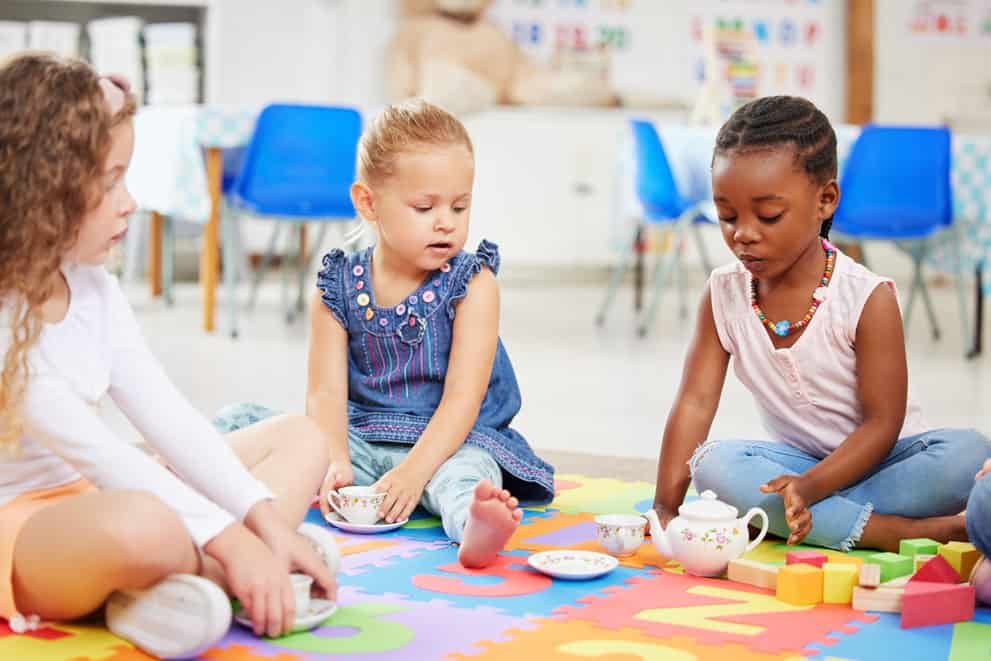
One of the most valuable skills parents can develop is learning to recognize when their child is ready to advance to the next stage of play development. These transitions don’t happen all at once, and they’re not marked by specific birthdays. Instead, children demonstrate readiness through behavioral, cognitive, motor, and social changes that signal their brain is prepared for more complex play. Understanding these signs enables you to provide the right support, materials, and opportunities at precisely the right moment—which accelerates development and prevents the frustration that comes from offering activities that are either too simple or too challenging.
From Solitary to Spectator Play: The First Social Transition (Around 2 Years)
Your child has been contentedly playing alone for months, exploring toys independently. Then something shifts. They begin to notice other children.
Cognitive Signs of Readiness
The foundational change is cognitive awareness. Your child begins to understand that other people have interests, intentions, and activities separate from their own. This is a significant mental milestone. They start to track what other children are doing—not with envy or desire to join, but with genuine curiosity.
Behavioral Signs to Watch For
Standing near other children rather than avoiding them is the clearest sign. Your child who previously was content in solitary play now wants to be where other children are playing. Watch for:
- Intense watching of what peers are doing (staring intently)
- Pointing at other children’s activities (“Look, she building!”)
- Standing on the sidelines while other children play, clearly interested
- Asking questions about peers (“What she doing?”)
- No longer running away from group situations
Your child is not yet trying to join in. This is crucial to understand—spectator play looks like the child is being left out, but it’s actually a critical learning stage. Your child is learning social skills by observation, preparing for the interactive play that will come later.
What This Looks Like in Real Life
At a playgroup, your 2-year-old stands about three feet from two other toddlers building with blocks. She watches intently as they stack and knock down. She doesn’t ask to join. She doesn’t reach for blocks. She simply observes. This is spectator play, and it’s essential preparation for the next stage.
How to Support This Transition
Don’t force participation. Parents often worry that their child is being excluded or that they should push them to “join in.” This is the opposite of what serves development. Observation is the foundation for the next stage.
Instead:
- Expose your child to peer groups regularly (playgroups, parks, library story times)
- Create extended observation opportunities (let them watch for 15-20 minutes without pressure to join)
- Verbally acknowledge what peers are doing (“See, he’s building a tower”)
- Don’t pressure participation—let interest develop naturally
- Celebrate observation (“You’re watching! That’s so smart—you’re learning”)
From Spectator to Parallel Play: Independence Alongside Peers (Around 2-3 Years)
After weeks or months of watching, your child begins to play alongside other children—but not with them. This is parallel play, and it’s a major transition.
Cognitive Signs of Readiness
Your child now understands:
- That toys have specific functions (cups for drinking, phones for calling)
- That other children use similar toys
- That they can engage in their own activity while physically near others
This requires understanding that they can play and coexist with peers simultaneously—a cognitive feat many 18-month-olds aren’t yet capable of.
Motor Signs
Your child can now:
- Sit or stand beside a peer for extended periods
- Manipulate toys with sufficient control to engage in focused activity
- Sustain fine or gross motor play while another child does the same nearby
Behavioral Signs to Watch For
Playing with similar toys while sitting near other children, but showing no direct interaction, is the hallmark of parallel play.
Watch for:
- Sitting at sand table while another child digs, each doing separate activities
- Painting at adjacent easels, each focused on own work
- Building separate block structures inches apart
- Occasional awareness of the other child (glancing, noticing their toys)
- Independence in play (not needing adult to facilitate interaction)
- Willingness to be near peers for 10+ minutes
Parallel play is not interactive. The child is not collaborating, sharing toward a common goal, or even directly talking to the other child. Yet it’s a critical stage because it allows the child to practice:
- Coexistence with peers
- Learning by observing others’ play
- Practicing the same skills in same-activity context
- Building comfort with peer presence
What This Looks Like in Real Life
You set up a painting activity at home playdate. Two toddlers stand at adjacent easels. Child A paints large abstract strokes. Child B paints more deliberately. They occasionally glance at each other’s work. Child A says, “Mine pretty!” Child B continues painting. No back-and-forth. No shared goal. But both children are playing comfortably in proximity, and both are learning from observing the other’s approach.
Red Flags for Concern
By age 2.5-3, if your child shows:
- Complete disinterest in being near other children
- Extreme distress in proximity to peers
- No awareness that other children exist
- Desire to avoid all peer situations
These warrant discussion with your pediatrician.
How to Support This Transition
Create side-by-side play opportunities:
- Set up identical activities for two children (painting at adjacent easels, sand boxes side by side)
- Use shared materials (both children drawing from same crayon box) without requiring interaction
- Provide adequate space so children don’t feel crowded or jostled
- Regular exposure to same peer group (same playdate friend, same class) helps comfort develop
- Allow child to choose whether to participate in group activities
From Parallel to Associative Play: Interest in Peers (Around 3-4 Years)
After months of parallel play, something shifts. Your child begins to notice and interact with the child next to them. This is associative play, and it marks a genuine interest in other people, not just tolerance of their presence.
Cognitive Signs of Readiness
Your child now understands:
- Symbolic thinking is solid (objects represent other things)
- Others’ perspectives matter (she wants a turn; he’s interested in that toy)
- Sequences and stories (complex pretend play scenarios with multiple steps)
- Cause and effect in social contexts (if I ask, she might let me play)
Language Signs
This transition is heavily supported by language development. Your child can:
- Use 3-4+ word sentences consistently
- Ask questions (“What are you doing?”
- Understand 2-3 part commands (“Put on your shoes and come here”)
- Explain ideas (“I’m making a tower”)
Without this language capacity, associative play is difficult. Children need to express interest and coordinate ideas verbally.
Motor Signs
Your child’s motor skills now allow:
- More complex play sequences
- Better fine motor control
- Ability to engage in activities peers are doing
Behavioral Signs of Readiness—The Clearest Indicators
This is where parent observation becomes most valuable. Watch for these specific signs:
1. Spontaneous Interest in What Peers Are Doing
- Asking “What you doing?” of other children
- Moving closer to watch peer activities
- Expressing interest (“That looks fun!”)
- This is different from parallel play because the interest is in the other child and their activity, not just tolerance of proximity.
2. Initiating Interaction
- Asking to join (“Can I play?”
- Offering suggestions (“You could build it bigger”)
- Commenting on peer’s play (“That’s a big tower!”)
- Using language to coordinate rather than just doing separate activities
3. Playing the Same Activity with Different Individual Goals
- Two children at tea party: one feeding her stuffed animal, the other feeding her doll—different animals, different feeding sequences, but interaction (“What’s your animal eating?”
- Two children building: one making a tower, one making a wall, using same blocks, asking each other about their structures
- Two children on playground: one going down slide, one going down fire pole—different activities, same space, some interaction
This is the key difference from parallel play: the children are aware of and interacting with each other while still pursuing somewhat independent goals.
4. Willingness to Share Materials
- Offering toy to another child
- Taking turns with shared materials (though may still prefer own)
- Allowing peer to use toy without distress
5. Showing Concern for Peers
- Noticing when another child is upset
- Attempting to help (“Here, you can use this”)
- Expressing interest in peer’s wellbeing
6. Playing for Extended Periods with Peers
- Sustaining interaction for 5-10 minutes
- Returning to same peer for another round
- Remembering play from previous day (“Remember when we were doctors?”
7. Using Language to Negotiate Play Direction
- “Let’s play house”
- “You be the baby, I’ll be the mommy”
- Responding to peer suggestions
- Not yet fully cooperative (each child may still pursue different goals), but definitely interactive
What This Looks Like in Real Life
At a playdate, your 3-year-old and her friend both have babies (dolls). Your child says, “Let’s give them baths!” They fill a bowl with water. Your child washes her baby. Her friend washes her doll. Your child says, “Mine need sleep now.” Her friend says, “My baby sleepy too!” They put the dolls in pretend beds. Your child asks, “What’s your baby eating?” This is not fully cooperative (they’re not working toward one shared goal of caring for a “hospital”), but it’s definitely associative—they’re interacting, using language, responding to each other, though still pursuing somewhat independent play narratives.
Red Flags for Concern
By age 3-3.5, if your child shows:
- No interest in what other children are doing
- No attempt to interact with peers
- Extreme difficulty with even brief turn-taking
- No interest in peer friendships at all
- Unable to engage in any pretend play
These may indicate developmental delay or social-emotional challenges warranting professional evaluation.
How to Support This Transition
Facilitate Peer Opportunities
- Structured playgroups with small, consistent groups (same children weekly helps relationships develop)
- Parent-child classes (music, movement, art) that create peer context
- Regular one-on-one playdates with same friend (friendships develop through repetition)
- Preschool or group care exposure (even part-time)
Coach Social Interaction
- Model initiation: “Look, he’s building! Let’s ask what he’s making”
- Facilitate small interactions: “Tell him what you’re building”
- Praise peer interaction explicitly: “I saw you playing with him! You were such a good friend”
- Support through conflict: “She wants a turn. What should you do?”
Introduce Shared Dramatic Play Props
- Kitchen sets, doctor kits, dolls that naturally invite multiple players
- Child can play separately at first (“I’m cooking”), then progress to coordinated play
Read About Friendship and Cooperation
- Stories about making friends, playing together
- Discuss: “See, they’re playing together!”
From Associative to Cooperative Play: Shared Goals and Rules (Around 4 Years)
After many months of associative play, the final major transition occurs: your child becomes capable of genuinely cooperative play with shared goals and rules. This is the stage where the child is truly ready to play with friends, not just alongside them.
Cognitive Signs of Readiness
Your child now demonstrates:
- Complex symbolic play that they could plan and execute (extended narratives)
- Understanding others’ perspectives consistently
- Capacity to hold a shared goal (“Let’s build a castle”)
- Ability to plan and coordinate (“First we need to build walls, then a door”)
- Memory of rules and application to play
- Beginning abstract thinking (using objects creatively without literal representation)
Language Signs
Your child can:
- Use 4+ word sentences consistently
- Have actual conversations (back-and-forth dialogue beyond simple exchanges)
- Use language to establish roles (“You be the doctor, I’ll be the patient”)
- Tell stories with sequence and detail
- Understand and explain rules
Motor Skills
- Refined gross motor skills (hopping, catching, climbing)
- Fine motor skills supporting more complex play
- Physical coordination allowing participation in group physical games
Behavioral Signs of Readiness—The Game-Changers
1. Expressing Interest in Playing WITH Specific Children
This is notably different from just playing near peers. Your child now:
- Asks for specific friends (“Can Marcus come over?”
- Wants to include particular children in activities
- Shows preference for certain peers
- Expresses desire for friendship (“I want to be her friend”)
2. Ability to Maintain a Shared Goal
- Agreeing on play theme (“Let’s play hospital”)
- Working toward common objective (“We need to build a tower for the castle”)
- Adapting play based on shared purpose rather than just individual goals
- Sustaining this goal across multiple minutes (15-30 minutes or more)
3. Assigning and Accepting Roles
- Proposing roles (“You be the doctor, I’ll be the patient”)
- Accepting suggested roles without excessive resistance
- Staying in role for extended periods
- Understanding that roles are collaborative (the doctor needs a patient; the nurse helps the doctor)
4. Using Language to Coordinate and Negotiate
- “Wait, I need to get my medicine first” (coordinating sequence)
- “Can I be the mom now?” (negotiating role changes)
- “We need more blocks for the wall” (collaborative problem-solving)
- “What if the baby gets sick?” (extending narrative together)
5. Able to Wait Turns for Several Minutes
- Not just taking one turn, but waiting multiple turns while peer plays
- Understanding the concept that turns are shared
- Managing frustration when waiting
6. Showing Genuine Concern and Empathy for Peers
- “Are you okay?” when peer is upset
- Offering help (“I can help you build”)
- Comforting peers (“Don’t be sad, you can go next”)
- This goes beyond tolerance—it’s genuine care
7. Following and Creating Rules
- Understanding game rules (“In tag, you run from the person who’s it”)
- Attempting to follow rules even when inconvenient
- Suggesting rule modifications (“What if we can’t tag you if you’re on the bench?”
- Accepting peer suggestions for rule changes
8. Engaging in Extended Group Play
- Playing with 3-4 children simultaneously (not just dyads)
- Sustaining group play for 20-30+ minutes
- Coordinating among multiple players (not just one-on-one)
What This Looks Like in Real Life
Three 4-year-olds decide to play hospital. “I’m the doctor,” says Child A. “I’ll be the nurse,” says Child B. “I’m the sick person,” says Child C.
Child A: “First we need to check your temperature.”
Child C lies down. Child A pretends to take temperature.
Child B: “I’ll get the medicine!” (brings block, pretends it’s medicine)
Child C: “Ow, my tummy hurts!”
Child A: “We need to give you medicine.”
Child B gives pretend medicine to Child C.
Child C: “Better! I can go home now.”
Child A: “No wait, we need to wrap your arm!” (adapts to extend play)
This is fully cooperative play: shared goal (help patient), multiple roles, language coordination, turn-taking, adaptation based on shared narrative, genuine concern for peer’s character. No one is pursuing an independent agenda. All are working toward the same storyline.
Red Flags for Concern
By age 4, if your child shows:
- Little to no interest in playing with shared goals
- Extreme difficulty accepting roles others suggest
- Unable to wait turns for more than a minute or two
- Difficulty with any group physical games (tag, hide-and-seek)
- No interest in friendships or claiming peer relationships
- Unable to follow even simple game rules
These warrant discussion with your pediatrician or early childhood educator.
How to Support This Transition
Facilitate Games with Clear Rules
- Simple board games (Candy Land, Chutes and Ladders)
- Movement games (tag, hide-and-seek, red light-green light)
- Cooperative games where everyone works toward shared goal
Create Elaborate Dramatic Play Scenarios
- Themed dramatic play areas (restaurant, library, veterinarian)
- Supply props that naturally invite multiple roles
- Introduce characters and plot ideas, then let children develop
Coach Role Assignment and Negotiation
- “What role would you like?” (giving choice)
- “She wants to be the teacher—what will you be?” (facilitating negotiation)
- “First you’re the doctor, then I’ll be the doctor” (fairness planning)
Build Regular Peer Friendships
- Weekly playdates with same friend (deeper cooperative play develops through repetition)
- Preschool or group settings where children interact regularly
- Organized activities (sports, music, art classes)
Explicitly Praise Cooperation
- “I loved watching you two play together!”
- “You were so kind when she needed help”
- “You both had fun with the same game!”
Within-Stage Readiness: Deepening Play Within Current Stages
While much of this guide focuses on transitions between stages, it’s equally important to recognize signs that your child is ready for greater complexity within their current play stage.
Signs of Within-Stage Readiness
Solitary Play Stage: Your child is ready for more complex solitary play when they:
- Sustain interest in single toy for 5-10 minutes
- Combine two toys in meaningful way (cup and spoon together)
- Explore toys in multiple ways (rolling ball, shaking it, throwing it)
This suggests readiness for more complex toys (shape sorters, blocks, stacking cups).
Parallel Play Stage: Your child is ready for deeper parallel play when they:
- Engage with similar toys for extended periods (15+ minutes)
- Clearly notice and acknowledge peers
- Willingly be near peers (without anxiety or need to escape)
- Show interest in what peer’s doing (reaching toward toy, asking “What that?”
This suggests readiness for longer playdates, peer groups, and more engaging parallel activities.
Associative Play Stage: Your child is ready for increasing complexity when they:
- Sustain peer interaction for 10+ minutes consistently
- Follow simple instructions from peers (“You build there”)
- Take turns for multiple consecutive rounds
- Using language increasingly to coordinate activity
This suggests readiness for more structured activities, introduction of simple games, and encouragement of longer peer interactions.
Cooperative Play Stage: Your child is ready to deepen when they:
- Sustain cooperative play for 30+ minutes
- Suggest elaborate role expansions
- Adapt to peer suggestions about play direction
- Play with larger groups (4+ children)
This suggests readiness for organized sports, more complex games, group activities, and peer-led play experiences.
Red Flags: When Professional Evaluation May Be Needed
While development progresses at different rates, there are signs that warrant professional consultation. The research identifies specific red flags at different ages.
Red Flags by Age Group
12-24 Months
- Doesn’t say “mama” or “dada” (even non-functionally) by 12 months
- Doesn’t use gestures (waving, pointing) by 12 months
- Shows no interest in other children whatsoever
- Doesn’t engage in functional play (using cup for drinking, phone for calling)
- No cause-and-effect understanding
24-36 Months
- Limited or absent speech (not using 50+ words by 24 months)
- No involvement in pretend play at all by 24-30 months
- Little interest in other children or what they’re doing
- Difficulty with motor skills (frequent falling, stairs are very difficult)
- Inability to build tower of 4 blocks by 30 months
- Inability to copy simple shapes (circle) by 3 years
3+ Years
- Limited inconsistent speech despite exposure to language
- Challenges with social interactions (can’t initiate peer play at all by 3.5)
- Lack of independence in daily activities (dressing, self-feeding)
- Lack of engagement in pretend play by age 3
- Repetitive, atypical play patterns (lining up toys without imaginative component; unusual object use
- Extreme behavioral responses (prolonged tantrums, no self-regulation by 3.5)
- Showing no interest in peer play or friendships by age 4
When to Contact Your Pediatrician
- Your child is losing skills previously mastered (regression)
- Your child stays in one play stage much longer than expected
- Developmental delays are evident across multiple domains (not just speech, but also motor, social, cognitive)
- Your child has extreme difficulty with emotions or regulation during play
- You’re genuinely concerned about your child’s development (trust your instinct)
Remember: Some variability is normal. Children develop at different rates. But when you’re concerned, it’s always appropriate to ask for professional guidance.
The Crucial Principle: Individual Variation
The ages given throughout this guide are generalizations, not absolutes. Some children transition from parallel to associative play at age 2.5; others at age 3.5. Some engage in fully cooperative play by age 3.5; others need until age 4.5 or later. This variation is normal.
What matters most is that:
- Development follows a logical sequence (spectator before parallel, parallel before associative, associative before fully cooperative)
- Your child shows clear signs of progressing toward the next stage
- Each stage builds on previous stages
- You’re providing appropriate materials and opportunities for your child’s current stage
The goal is not to accelerate your child through stages but to recognize where your child is, support that stage richly, and provide the materials and opportunities they need to progress naturally when ready.