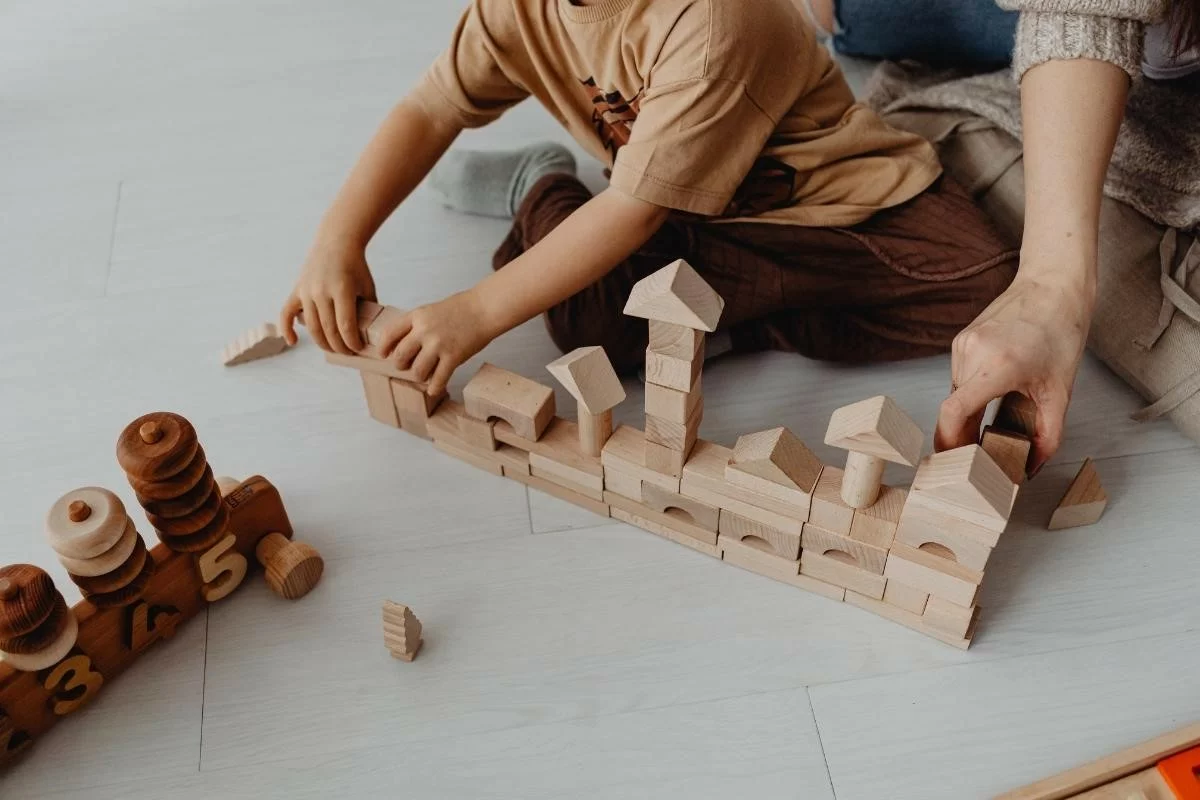
The toy a child plays with is far more than entertainment. Every toy is a tool for development, and the right toy at the right time can accelerate growth across cognitive, motor, and emotional domains. But not all toys are created equal. Understanding which toys support which developmental capacities—and why—enables parents and caregivers to make strategic choices that multiply the impact of play.
The Science of Toy Selection: Zone of Proximal Development
Before discussing specific toys, it’s essential to understand the principle that governs how toys support learning: the Zone of Proximal Development (ZPD). Vygotsky’s concept of the ZPD describes the gap between what a child can do independently and what they can do with adult support. Optimal learning occurs in this zone—not too easy (causing boredom) and not too difficult (causing frustration), but just challenging enough that with support, the child can master it.
This principle is crucial when selecting toys. Age-appropriate toys—those designed for the child’s current developmental level—are significantly more likely to be fully utilized than toys designed for older children. A 2-year-old can engage with a shape sorter, but will struggle with a puzzle intended for 5-year-olds, potentially abandoning it in frustration.
However, the research reveals nuance: some toy categories (like imaginative play sets, vehicles, and instruments) are equally engaging regardless of age-appropriateness, because they’re inherently flexible. A doll works as a baby doll for a 2-year-old and as a complex character in an elaborate narrative for a 4-year-old. The toy adapts to the child’s developmental stage.
Cognitive Development: Building Brains Through Toys
Cognitive development is the increased ability to process information and understand how the world works. Research shows that 90% of preschool play in the US involves toys, and toys fundamentally shape how children think. Toys act as mediators for different thinking skills: problem-solving, spatial reasoning, logical thinking, creativity, and memory.
Key Cognitive Skills Toys Develop
| Cognitive Skill | How Toys Support It | Examples |
|---|---|---|
| Problem-Solving | Toys with multiple solutions encourage trial-and-error and creative thinking | Blocks, shape sorters, open-ended construction materials |
| Spatial Awareness | Building and 3D manipulation develop understanding of space | Blocks, puzzles, Duplo, stacking cups |
| Hand-Eye Coordination | Reaching, grasping, manipulating toys refine coordination | Blocks, shape sorters, balls, threading toys |
| Logical Reasoning | Matching, categorizing, sequencing games build logic | Puzzles, matching games, shape sorters |
| Critical Thinking | Toys within Zone of Proximal Development challenge thinking | Age-appropriate building sets, games with rules |
| Imagination & Creativity | Open-ended toys invite invention, no “right way” | Blocks, dramatic play props, art supplies |
| Memory | Games and sequential play strengthen memory | Board games, matching games, memory cards |
| Attention & Focus | Age-appropriate toys with manageable complexity sustain attention | Puzzle appropriate to child’s level, cause-and-effect toys |
How Specific Toys Support Cognitive Growth
Shape Sorters are fundamental cognitive tools. When a child places a square block into the square hole (after trying the round hole), they’re learning categorization, shape recognition, and geometric concepts. They’re also practicing hand-eye coordination and fine motor control. The toy grows with the child: it can start with the lid off (easier) and progress to complete matching when the child is ready. This growth arc is crucial—when properly matched to the ZPD, the shape sorter challenges without frustrating.
Puzzles similarly grow with cognitive capacity. A simple 2-piece puzzle for an 18-month-old teaches that parts fit together and develop spatial awareness. A 6-piece puzzle for a 3-year-old requires strategic thinking and problem-solving. Complex puzzles for older children build sustained attention and logical reasoning. Importantly, research shows instructional toys (including puzzles) have the strongest “age-appropriateness effects”—meaning they’re significantly less effective if too advanced. A puzzle that’s too hard becomes a source of frustration rather than learning.
Building blocks are among the most cognitively powerful toys available. They’re open-ended (no “right way” to build), they provide immediate visual feedback, and they grow with the child. A 12-month-old stacks blocks and knocks them down, learning cause-effect. A 2-year-old builds a tower, learning balance and spatial relationships. A 4-year-old creates elaborate structures representing houses or castles, developing planning, working memory, and creative thinking. A 7-year-old might use blocks as math manipulatives. The same toy supports increasingly sophisticated cognitive development because it’s fundamentally open-ended.
Pretend play sets (kitchen toys, doctor kits, dolls) support symbolic thinking—the ability to use one thing (a plastic stethoscope) to represent another (a real doctor’s tool). This symbolic capacity is foundational to reading, mathematics, and abstract thinking. When children engage in role-play with these props, they explore cause-and-effect (“The patient gets better when I give medicine”), understand sequencing (“First I listen, then I give medicine”), and build narrative skills (“The doctor works at the hospital”). Pretend play also supports empathy and theory of mind—the child must consider what the “patient” is feeling and thinking.
Cause-and-effect toys (toys with buttons that produce lights or sounds, springs that pop) teach a fundamental cognitive concept: actions have consequences. This understanding is essential for all learning. Toys that clearly demonstrate cause-and-effect help infants and toddlers grasp that they can influence their environment—a critical foundation for motivation and learning.
The Power of Open-Ended Toys
A critical finding in developmental research is that open-ended toys (materials with no predetermined outcome) support deeper cognitive growth than closed-ended toys (toys with a specific goal or solution).
Open-ended toys like blocks, containers, balls, and dramatic play props encourage exploration, decision-making, and creative problem-solving. Because there’s no “right way” to play with them:
- Children develop flexible thinking (the block can be a phone, a car, a building)
- They define the problem themselves (“How can I build higher?”) and invent solutions
- Cognitive flexibility develops through adaptation and improvisation
- Executive function strengthens as they plan what to build, remember their plans, and adjust when blocks fall
- Creativity flourishes because the child generates ideas without constraint
Closed-ended toys (puzzles, instructional games) serve a different purpose: they develop focus, mastery, and the ability to complete defined tasks. They teach patience and persistence in pursuit of a specific goal. However, they’re less effective at developing creative thinking and flexible problem-solving.
The optimal approach combines both. A child benefits from having some open-ended materials (blocks, dramatic play props, art supplies) where they direct play and develop creativity, and some closed-ended toys (puzzles, games) that teach focused completion and mastery.
Why Fewer Toys Support Better Cognitive Development
Counterintuitively, research reveals that environments with fewer toys support stronger cognitive development than those with many toys. Children who play in environments with fewer toys display:
- Sustained levels of attention (they stay focused longer)
- Increased imagination (they create more elaborate scenarios)
- Enhanced perception and cognition (they notice more details)
- Better motor coordination
Why? Fewer toys eliminate disruptions that interfere with the very attention skills essential for cognition, problem-solving, sequencing, and communication. With fewer options, children engage more deeply with available materials rather than flitting between toys. This focused engagement is where learning consolidates.
Motor Skill Development: Toys That Build Strength and Coordination
Motor development unfolds in two parallel streams: fine motor skills (small movements using hands and fingers) and gross motor skills (large movements using whole body). Toys support both, and the progression from simpler to more complex motor challenges mirrors children’s advancing abilities.
Fine Motor Development Through Toys
Fine motor skills—grasping, pinching, manipulating objects, hand-eye coordination—are prerequisites for writing, self-feeding, dressing, and countless daily activities. Toys support these skills in specific ways.
Stacking and nesting toys (stacking rings, nesting cups, stacking blocks) develop fine motor control and spatial understanding. A young infant grasps a ring; later, the child learns that rings stack in order of size. The toy grows with the child, offering increasing challenge.
Shape sorters require positioning blocks correctly so they fit into holes, demanding precise hand control and spatial reasoning. Starting with the lid off makes the task easier; adding the lid increases challenge. This scalability within a single toy makes shape sorters exceptionally valuable—they can be used from 6 months onward but don’t become “too easy” until the child masters complete matching around 18 months.
Building blocks (wooden blocks, Duplo, Lego) activate fine motor skills as children manipulate pieces, develop spatial reasoning, and create increasingly complex structures. The precision required increases with the size of the blocks—Duplo requires less dexterity than Lego, which develops hand strength and finger control progressively.
Busy boards—boards with zippers, buckles, knobs, switches, and latches—specifically develop the hand-eye coordination and pincer grasp needed for dressing, packing a backpack, and life skills. They allow children to practice these skills in a safe, toy context before needing them in real life.
Bath crayons and vertical-surface toys build hand, wrist, and shoulder strength in ways horizontal play (like drawing on paper) doesn’t. The vertical surface requires different muscle engagement and prepares the hand for more advanced fine motor work.
Velcro ball mitts require both hands to work together in coordinated ways, developing bilateral coordination—the ability to use both hands simultaneously for different purposes. This is essential for skills like tying shoes, buttoning, and later, writing.
The pattern across all these toys is consistent: they provide sensory feedback (visual, tactile, proprioceptive) that helps the child understand and refine their movements.
Gross Motor Development Through Toys
Gross motor skills—crawling, walking, running, jumping, climbing—develop through movement and physical challenge. Toys that encourage movement are foundational.
Climbing structures, slides, and swings motivate children to explore what their bodies can do. Climbing builds strength in legs, arms, and core while developing balance and spatial awareness. Swings develop balance and coordination. These equipment pieces provide the physical challenge that drives motor development.
Sand and water toys encourage large movements—splashing, digging, wading—that are repeated and progressively refined. The resistance of sand and water requires muscle engagement, and the feedback (splashing, sand flying) makes the experience engaging enough for children to repeat movements that strengthen and refine coordination.
Push toys (like the classic Bobby Car) strengthen leg muscles and develop balance as the child learns to coordinate pushing and walking. These toys support the transition to independent walking.
Balance bikes (pedal-free bikes) develop balance and coordination before introducing pedaling, allowing children to focus on one skill at a time.
Crawl tunnels specifically encourage crawling, one of the most important gross motor milestones. Crawling builds strength and coordination that benefits all areas of development. Tunnels make crawling more engaging by creating a goal (getting through the tunnel) that motivates repeated practice.
Balls of various sizes support rolling, throwing, and kicking—fundamental gross motor skills. Different sizes suit different developmental stages: a larger, soft ball is easier for a toddler to grasp and roll, while smaller balls challenge older children’s throwing and catching.
Each of these supports the principle that motor skills develop through repetition of movements in progressively challenging contexts. A toy that provides the right level of physical challenge—neither too easy nor too difficult—encourages the repeated practice that consolidates motor learning.
Emotional Development: Toys as Tools for Security and Expression
While physical and cognitive development are more visible, emotional development is equally critical. Toys support emotional growth in three primary ways: providing security and comfort, enabling safe emotional expression, and facilitating social-emotional learning.
Security Objects and Emotional Safety
Stuffed animals, blankets, and other beloved toys serve as security objects—toys that provide comfort and emotional stability. When a child feels scared, tired, lonely, or separated from caregivers, a security object provides reassurance.
The mechanism is profound: security objects help children self-soothe. A child who can hug a beloved stuffed animal is developing self-regulation strategies that will serve them throughout life. The object becomes a portable source of emotional safety, enabling exploration and independence from caregivers because the child has a tangible source of comfort.
Moreover, security objects support emotional processing. A child might pretend their stuffed animal is sad, which allows them to explore and understand their own sadness in a safe, indirect way. This symbolic processing is how children make sense of emotions they’re not yet able to articulate verbally.
Importantly, research shows that emotional security fostered by comfort items contributes to a child’s confidence in exploring the world—which is essential for cognitive and social development. Children who feel emotionally secure are more likely to engage in the exploratory play critical for learning across all domains.
Dramatic Play Props and Emotional Expression
Pretend play sets—kitchen toys, doctor kits, dolls, dress-up clothes—provide contexts for emotional exploration and expression. When a child plays “house” with a doll, pretending to comfort a crying baby, they’re practicing emotional responsiveness and empathy. When they role-play as a doctor, they’re exploring a scenario that might feel scary in real life (going to the doctor) in a safe, controlled context where they have power and agency.
This type of play allows children to:
- Express emotions they can’t yet verbalize (“My doll is sad”)
- Practice managing emotions (“My doll is sad, so I comfort her”)
- Develop empathy by considering others’ feelings
- Build confidence by enacting different roles and handling different scenarios
- Process experiences (a child who had a scary doctor visit can replay it with toys, gradually making it less frightening through repeated, controlled exposure)
Creative Materials and Emotional Regulation
Art supplies, craft kits, and open-ended creative materials support emotional development by providing non-verbal channels for emotional expression. A child might not be able to say “I feel angry,” but can express it through paint colors and marks on paper. Similarly, a child processing sadness might create dark colors or slow, deliberate marks.
These creative outlets also provide what researchers call “emotional regulation”—the ability to manage one’s feelings. The focused attention required by art activities calms the nervous system, and the act of creating something provides a sense of agency and accomplishment.
Cooperative Toys and Social-Emotional Learning
Toys that require two or more players—board games, cooperative games, dolls for shared play—support social-emotional development by requiring negotiation, turn-taking, sharing, and communication.
When children play with others using shared toys, they learn:
- To manage frustration when they don’t win or get their way
- To take turns (waiting for another’s turn develops patience and impulse control)
- To share materials (learning to consider others’ needs)
- To communicate and negotiate (“Can I play? What do you want to build?”)
- To recognize and respond to others’ emotions (empathy)
- To resolve conflicts (“You want the red block and I want it—what should we do?”)
These social-emotional skills are among the most important predictors of lifelong success, yet they develop primarily through the friction and negotiation that comes from playing with others.
Sensory Development: Building Brain Connections Through Sensation
Sensory development—learning through touch, sight, sound, smell, and taste—is foundational to all development. Sensory toys are specifically designed to engage multiple senses and support sensory exploration.
How Sensory Exploration Supports Growth
When infants and toddlers engage with sensory toys, they’re not “just playing”—they’re building neural connections. Each time a baby shakes a rattle and hears the sound, grasps a textured ball and feels the texture, sees colors on a high-contrast book, they’re strengthening the sensory pathways in their brain.
This sensory input serves multiple functions:
- Cognitive: Understanding cause-effect (“I shake, it sounds”)
- Motor: Fine motor practice (grasping, manipulating)
- Emotional: Comfort from soft textures, soothing sounds
- Social: Shared sensory experiences with caregivers build attachment
Sensory Toys by Age
Different sensory toys suit different developmental stages:
| Age | Sensory Toys | Sensory Focus |
|---|---|---|
| 0-3 months | High-contrast books, soft rattles, wooden rattles, mirrors, musical mobiles | Visual focus (high-contrast), grasping, sound, self-awareness |
| 3-6 months | Sensory scarves, crinkle toys, soft blocks, textured balls, mirror toys | Tactile exploration, sound awareness, visual tracking |
| 6-12 months | Textured sensory balls, interlocking rings, sensory shakers, stacking cups | Tactile exploration, cause-effect, teething relief, coordination |
| 12+ months | Musical instruments, diverse texture toys, water/sand toys | Exploration through multiple senses, cause-effect mastery |
The common principle: variety matters. Toys with different textures (smooth, bumpy, crinkly), colors (high-contrast then varied), and sounds (gentle, varied pitches) provide the sensory diversity that builds robust sensory understanding and neural pathways.
Integrating the Three Domains: The Right Toy Does Multiple Jobs
The most important toys for development serve multiple domains simultaneously. A shape sorter, for example:
- Cognitive: Problem-solving, categorization, spatial awareness
- Motor: Fine motor control, hand-eye coordination
- Emotional: Building confidence through success, frustration tolerance through challenge
A doll:
- Cognitive: Symbolic thinking, narrative skills, cause-effect reasoning
- Motor: Fine motor (dressing, positioning), gross motor (carrying, movement)
- Emotional: Emotional processing, empathy, comfort
Building blocks:
- Cognitive: Problem-solving, spatial reasoning, creative thinking
- Motor: Fine motor precision, gross motor (moving larger structures)
- Emotional: Confidence through creation, resilience (towers fall, rebuild), social skills (cooperative building)
The principle is clear: the most developmentally valuable toys are those that challenge multiple domains simultaneously, keep the child in the Zone of Proximal Development, and adapt as the child grows.
Practical Guidelines for Toy Selection
Choose Open-Ended Materials First
Prioritize toys without predetermined outcomes: blocks, containers, balls, dramatic play props. These grow with the child and support creativity, problem-solving, and flexible thinking.
Ensure Age-Appropriateness
Select toys designed for the child’s current developmental level, not older siblings’ levels. Age-appropriate toys are significantly more likely to be fully utilized. However, recognize that some toy categories (dramatic play props, vehicles, instruments) work across ages.
Offer Fewer Toys
Curate your toy collection rather than accumulating many toys. Fewer toys with deeper engagement supports better cognitive development than many toys with scattered attention.
Include Variety Across Categories
- Fine motor toys: Stacking, shape sorters, building
- Gross motor toys: Climbing, balls, vehicles
- Cognitive toys: Puzzles, cause-and-effect, pretend play
- Sensory toys: Varied textures, sounds, visual interest
- Emotional toys: Security objects, dramatic play props, creative materials
Match Toy to Zone of Proximal Development
The ideal toy is slightly challenging—achievable with effort or adult support, but not frustrating or overwhelming. Toys that are too easy cause boredom; toys that are too hard cause frustration and abandonment.
Prioritize Toys That Grow with the Child
Toys that can be used in increasingly complex ways—shape sorters, blocks, balls, dramatic play props—offer exceptional value because they remain relevant as the child develops.
Recognize That Adult Engagement Multiplies Impact
A toy’s developmental benefit depends partly on how an adult engages with the child using it. Co-play, narration, and scaffolded support enhance learning. Even the “best” toy has limited impact in isolation.
Conclusion: Toys as Development Tools
Toys are not luxuries or distractions—they’re tools that quite literally build children’s brains. The right toys, selected with understanding of developmental domains, appropriately matched to the child’s current level, and used in responsive interaction with caring adults, support explosive growth across cognitive, motor, and emotional capacities.
The most developmentally powerful toys share common characteristics: they’re open-ended (inviting multiple uses), age-appropriate (matching the Zone of Proximal Development), adaptable (growing with the child), and multi-sensory (engaging multiple developmental domains). When toys possess these qualities, and when adults engage responsively with children during play, toys become what they fundamentally are: vehicles for the remarkable developmental journey from infancy to childhood.