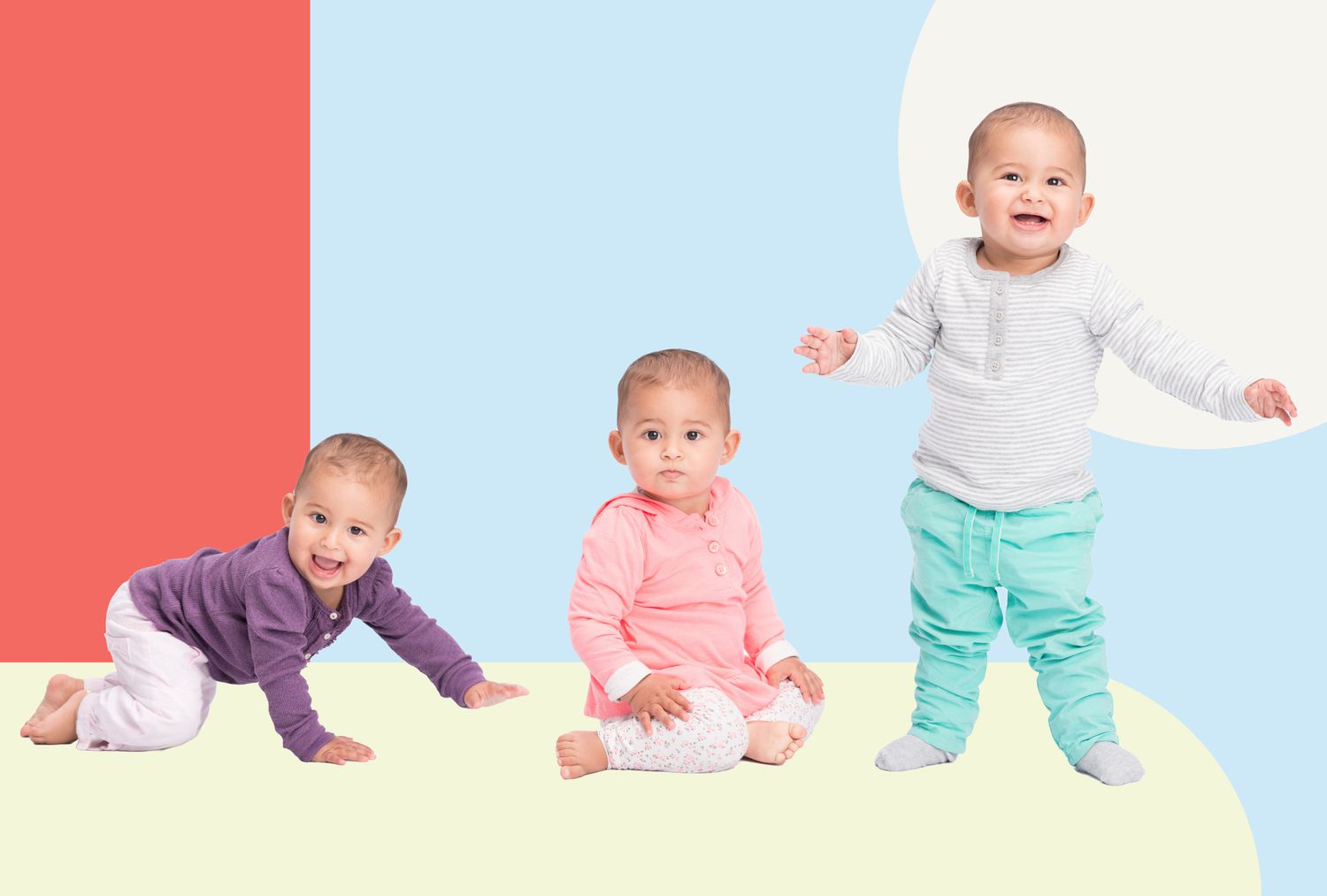
Play is not a single activity but a progression of qualitatively different types of engagement that unfold predictably as children mature. Understanding these developmental stages enables parents to recognize what their child is naturally attempting to do, provide the right toys and environment at the right time, and respond meaningfully to their emerging capacities. This guide outlines the specific milestones and needs at each major developmental stage from birth through age 4.
Birth to 3 Months: Establishing Connection Through Sensory Play
What’s Happening
Newborns are in the “unoccupied play” stage—a time of discovery where they are learning about their own bodies and beginning to form the first connections with caregivers. Their vision is limited (they see best within 8-12 inches), and they rely heavily on touch, sound, and responsive interaction to begin understanding that they are separate beings in a responsive world.
Key Play Milestones
| Age | Milestones |
|---|---|
| Birth–6 weeks | Reflexive grasping when objects placed in palm; responding to sounds with eye tracking; beginning to hold gaze |
| 6–12 weeks | Social smiling; tracking faces and objects; cooing in response to voices; spending time on tummy strengthening neck |
| 3 months | Making coos and vocalizations; enjoying face-to-face interaction; beginning to bat at or reach toward objects |
What Your Baby Really Needs
Caregiver presence and responsiveness is the most critical element. Engage in “serve and return” interactions where you respond to your baby’s movements, sounds, and facial expressions. This responsive back-and-forth builds neural connections and establishes secure attachment.
Specific needs and activities:
- High-contrast visuals (black-and-white patterns, high-contrast books) to support developing vision
- Daily tummy time (15-30 minutes on your chest, lap, or floor) to build neck and shoulder strength
- Varied sensory experiences: different textures to touch (soft blankets, crinkly materials), varied sounds (music, singing, your voice), different environments
- Simple rattles and soft toys designed for mouthing and grasping
- Face-to-face play: making funny faces, blowing raspberries, counting fingers and toes, tickling
- Singing nursery rhymes and lullabies with rhythm and motion
- Naming body parts during diaper changes and bath time
The goal at this stage is not instruction but connection. Your responsiveness builds trust and lays the foundation for all future learning.
3 to 6 Months: Hand-Eye Coordination and Cause-Effect Awareness
What’s Happening
Around 3-4 months, the left and right hemispheres of your baby’s brain begin “talking” to each other, enabling much more coordinated movement. Your baby’s hands become increasingly interesting—they grasp and explore. The world shifts from something that happens to them to something they can interact with and influence.
Key Play Milestones
| Age | Milestones |
|---|---|
| 3–4 months | Reaching toward objects (though not yet grasping); sustained gaze at objects; responding with delight to social interaction |
| 4–6 months | Whole-hand grasp developing; grasping and exploring with entire palm (often dropping unintentionally); moving objects hand-to-hand; grabbing own feet |
| 5–6 months | Laughing in response to funny faces; playing peek-a-boo with increasing delight; rocking back and forth on belly (preparation for crawling) |
What Your Baby Really Needs
Toys within arm’s reach encourage reaching and grasping. Place toys to the side and in front to motivate reaching movements that strengthen shoulder and arm muscles.
Cause-and-effect experiences are essential. Babies at this stage are beginning to understand that their actions produce results. Provide:
- Rattles and bells: Baby shakes, sound happens. This is powerful learning.
- Crinkle toys: The sound and feel respond to grasping
- Toys with varied textures: Teething toys, soft cloths, fuzzy toys for tactile exploration
- Balls of different sizes for rolling and watching movement
- Toys that respond to touch (that make sounds when pressed)
- Interactive games: Peek-a-boo, “This Little Piggy,” Patty Cake—these teach that disappearance is temporary
Language and responsiveness: Narrate what your baby is doing (“You’re reaching for the rattle! You’re holding it!”). Read interactive cloth books together. Sing with movement.
6 to 9 Months: Problem-Solving Through Exploration
What’s Happening
Your baby is becoming a scientist. They now understand that hidden objects still exist (object permanence is strengthening), and they deliberately experiment with toys to discover their properties. Crawling or scooting emerges, dramatically expanding their world. Fine motor skills are refining—the pincer grip (thumb and forefinger coordination) is beginning to develop.
Key Play Milestones
| Age | Milestones |
|---|---|
| 6–8 months | Passing objects hand-to-hand; sitting without support; crawling or scooting styles emerging (bum shuffle, commando crawl, backward); raking grasp developing |
| 8–9 months | Pulling to stand; cruising along furniture; understanding object function (“that’s a cup”); responding to “no” and own name |
| 9 months+ | Using thumb and forefinger to pick up small objects (raking then pincer grasp emerging); experimenting intentionally with toys; enjoying hide-and-seek |
What Your Baby Really Needs
Problem-solving opportunities: Simple shape sorters are perfect at this stage. Through trial-and-error, your baby learns that shapes fit only certain ways. Provide guided exploration without directing.
Continued cause-and-effect toys: Dumping and filling containers, toys with buttons and switches, containers they can open and close.
Containers and objects for exploration:
- Stacking and nesting cups
- Interlocking rings or clipable toys
- Balls for rolling, throwing, and chasing
- Safe household items (wooden spoons, plastic containers, washcloths)
Gross motor support: As crawling and standing emerge, provide safe spaces to explore. Babies need to practice moving in varied terrain (carpet, tile, outdoor grass).
Language: Continue narrating play and introducing songs. Babies at 9-12 months often say “mama” and “dada” to the correct person. Respond enthusiastically to their vocalizations.
9 to 12 Months: Mastery and Early Communication
What’s Happening
Your baby is now a true “young scientist,” experimenting with intentionality. They throw objects from high chairs not to be naughty but to conduct experiments on gravity and cause-effect. They understand “Give it to me” and can search for hidden toys with purpose. Language is emerging: “mama,” “dada,” and simple gestures like waving and clapping.
Key Play Milestones
| Age | Milestones |
|---|---|
| 9–10 months | Immature pincer grasp developing (thumb and index finger coordination); intentional searching for hidden objects; throwing and watching things fall |
| 10–12 months | Refined pincer grasp; saying “mama” and “dada” to the correct person; understanding simple instructions; clapping along with songs; waving bye-bye |
What Your Baby Really Needs
Cause-and-effect toys remain central: Jack-in-the-box, toys with lights and sounds, anything that responds dramatically to baby’s action.
Fine motor practice:
- Shape sorters (encouraging trial-and-error problem-solving)
- Stacking cups and nesting toys
- Toys with buttons, switches, and knobs to manipulate
- Containers to fill and dump repeatedly
Gross motor support as walking emerges:
- Push toys for balance support
- Low climbing structures
- Balls to roll and chase
- Open space for cruising and early walking
Language-rich environment: Read picture books and point to objects (“Where’s the doggy?”). Play games like “ready, steady, go” that build anticipation and turn-taking. Sing nursery rhymes repeatedly—repetition strengthens neural pathways.
Play materials: Toys designed to be mouthed, grasped, thrown, and examined from multiple angles. Variety matters—different sizes, textures, and sounds support learning.
12 to 18 Months: Functional Play and Language Explosion
What’s Happening
This is when play becomes more purposeful and symbolic. Your toddler uses toys according to their function—cups for drinking, phones for calling. Walking is now refined, and independence is surging. Vocabulary explodes from around 10 words to 10-20 words by 18 months, and your toddler understands far more than they can say (about 5 times more words are understood than produced).
Key Play Milestones
| Age | Milestones |
|---|---|
| 12–15 months | Walking independently; stacking 2+ blocks; understanding toy function; enjoying balls, push/pull toys; saying 10-20 words; responding to own name |
| 15–18 months | Running/climbing; kneeling without help; understanding 2-word instructions; pointing to body parts when asked; early pretend play (pretending to drink from empty cup) |
What Your Baby Really Needs
Functional play props:
- Toy phones, cups, spoons, play food
- Dolls and stuffed animals for early pretend care
- Toy vehicles
- Items for household pretend play
Fine and gross motor materials:
- Blocks and stacking cups
- Shape sorters and 2-3 piece puzzles
- Balls for rolling, throwing, and kicking
- Push and pull toys as walking skills solidify
- Climbing structures and safe play furniture
Language support:
- Picture books for pointing and naming
- Singing and nursery rhymes (repeat favorites daily)
- Narration of daily activities (“We’re washing up,” “Splashing in the bath”)
- “Ready, steady, go” games that teach turn-taking
Sensory exploration: Water play, sand, varied textures. Toddlers learn through multiple senses.
18 to 24 Months: Symbolic Play Emerges
What’s Happening
The shift to symbolic play is profound. Your toddler now understands that one object can represent another—a block can be a phone, a box can be a car. They’re no longer just using toys for their function; they’re using imagination. Vocabulary continues its rapid growth (toward 50-200 words by 24 months), and two-word combinations are emerging (“Mommy go,” “big truck”).
Key Play Milestones
| Age | Milestones |
|---|---|
| 18 months | Early pretend play with simple sequences (feeding doll, then putting it to sleep); using objects symbolically; vocabulary growth accelerating |
| 20–24 months | More elaborate pretend scenarios with multiple steps; building towers with 4+ blocks; 50-200 word vocabulary; two-word phrases; following two-step instructions |
What Your Baby Really Needs
Dramatic play props:
- Dolls and stuffed animals
- Play kitchen items, toy food, dishes
- Toy phones
- Safe household items for pretend
- Different props to inspire varied scenarios
Cognitive play materials:
- Blocks for building and knocking down
- 2-3 piece puzzles
- Stacking and nesting toys
Gross motor opportunities:
- Climbing structures
- Balls for varied movements
- Slides and swings
Language:
- Picture books for reading together
- Narrating pretend play (“Oh, the dolly is drinking milk”)
- Singing and movement games
- Naming activities during routines
Social opportunities: Playing alongside other toddlers (parallel play). They don’t yet play together, but being in proximity to peers supports learning.
2 to 3 Years: Expanding Imagination and Early Cooperation
What’s Happening
Pretend play becomes increasingly elaborate. Your toddler engages in sequences of meaningful actions—not just feeding a doll, but feeding it, putting on its pajamas, and putting it to bed. Around age 3, associative play begins—your child becomes interested in what other children are doing and starts to interact, though true cooperation hasn’t yet emerged.
Key Play Milestones
| Age | Milestones |
|---|---|
| 2 years | Building towers of 8-10 blocks; vocabulary of 300+ words; two-word sentences (“More milk”); using objects symbolically (block as phone); playing hide-and-seek |
| 2.5–3 years | Complex pretend sequences with multiple steps; playing near other children with some interaction; kicking and throwing balls with direction; drawing scribbles with purpose; answering simple questions |
What Your Child Really Needs
Elaborate dramatic play setup:
- Play kitchen with food and dishes
- Doctor kit with tools and patient materials
- Dress-up clothes (hats, scarves, oversized shirts)
- Dolls and toy animals with accessories
- Toy vehicles
Construction and creative materials:
- Various block types
- 4-6 piece puzzles
- Art supplies: large crayons, markers, paint, paper
- Playdough and modeling materials
Gross motor equipment:
- Climbing structures, balance beams
- Slides and swings
- Balls for varied games
- Safe spaces for running and jumping
Sensory materials:
- Water and sand play with containers
- Paint and collage materials
Books and language:
- Predictable stories that toddlers can “read” along with
- Books about emotions and social situations
- Singing and movement songs
Peer interaction: Playgroups and supervised play with other children, though your child will still mostly play alongside rather than with peers.
3 to 4 Years: Cooperative Play and Complex Imagination
What’s Happening
This is when genuine cooperative play emerges. Your child now wants to play with other children, not just near them. They can assign roles (“You be the doctor, I’ll be the patient”), understand simple rules, and work toward shared goals. Emotionally, they’re developing empathy and the ability to comfort others. Gross motor skills are significantly refined—hopping, jumping over objects, climbing with confidence.
Key Play Milestones
| Age | Milestones |
|---|---|
| 3 years | Playing cooperatively with 1-2 peers; complex pretend scenarios with multiple steps and assigned roles; understanding simple games with rules; sentences with 4+ words |
| 3.5–4 years | Playing with 3-4 children; understanding turn-taking and fairness; drawing people with 2-4 body parts; hopping and standing on one foot; cutting with scissors (with help) |
What Your Child Really Needs
Sophisticated dramatic play props:
- Complete play kitchen and food
- Doctor/veterinarian kit
- Extensive dress-up clothes and costumes
- Transportation toys (vehicles, tracks)
- Dolls with realistic accessories
- Props for different scenarios (camping gear, picnic items)
Construction and artistic materials:
- Varied blocks and building sets
- 6-8 piece puzzles
- Art supplies: paint, markers, colored pencils, scissors (child-safe), paper
- Playdough and clay
Gross motor equipment:
- Balance beams
- Climbing structures
- Tricycles or bikes
- Varied balls for catching and throwing
Cognitive and games materials:
- Simple board games with turn-taking rules
- Books that tell longer stories
- Instruments for music making
Peer play opportunities: Regular time in group settings (preschool, playgroups, organized classes) where cooperative play is practiced.
Developmental Principles That Guide All Stages
Across all ages from birth to 4, several key principles ensure your child’s play supports optimal development:
Responsiveness matters more than toys. A caregiver who responds to your child’s cues, follows their lead, and engages authentically in play creates the conditions where development thrives. No expensive toy can replace attentive, warm engagement.
Repetition builds competence. Children need to play the same game, build the same tower, or read the same book many times. This repetition isn’t boring—it’s how neural pathways strengthen and skills consolidate.
Open-ended materials inspire more learning than highly structured toys. Blocks, containers, balls, and dramatic play props invite varied exploration. Toys with one specific function limit possibilities for discovery.
Mess and failure are features, not bugs. When children spill water, drop blocks, or knock over towers, they’re learning about physics, cause-and-effect, and persistence. Safe spaces for exploration include freedom to experiment without constant correction.
Language-rich environments accelerate all development. Narrating play, singing, reading, and engaging in conversation supports cognitive, social, emotional, and language development simultaneously.
Balance structure and freedom. Some play should be guided (you playing together, teaching a game) and some should be unstructured (your child directing the activity). Both serve different developmental purposes.
Supporting Play in Everyday Life
The beauty of developmental play is that it doesn’t require special classes, expensive toys, or elaborate planning. It requires presence and attunement. A caregiver who sits with a 6-month-old, watches them grasp and explore a rattle, and responds with delight is creating optimal conditions for development. A parent who follows a toddler’s lead in dramatic play—”Oh, the baby is hungry? Let’s feed her!”—is supporting brain growth as powerfully as any intervention.
At each stage, observe what your child is naturally drawn to do, provide the materials that support that stage of play, respond warmly to their efforts, and trust that through play, your child is literally constructing their brain and learning to navigate the world. The progression from reflexive grasping to complex cooperative play represents one of humanity’s most remarkable developmental achievements—and play is the primary engine of that development.